
GLP-1 in India
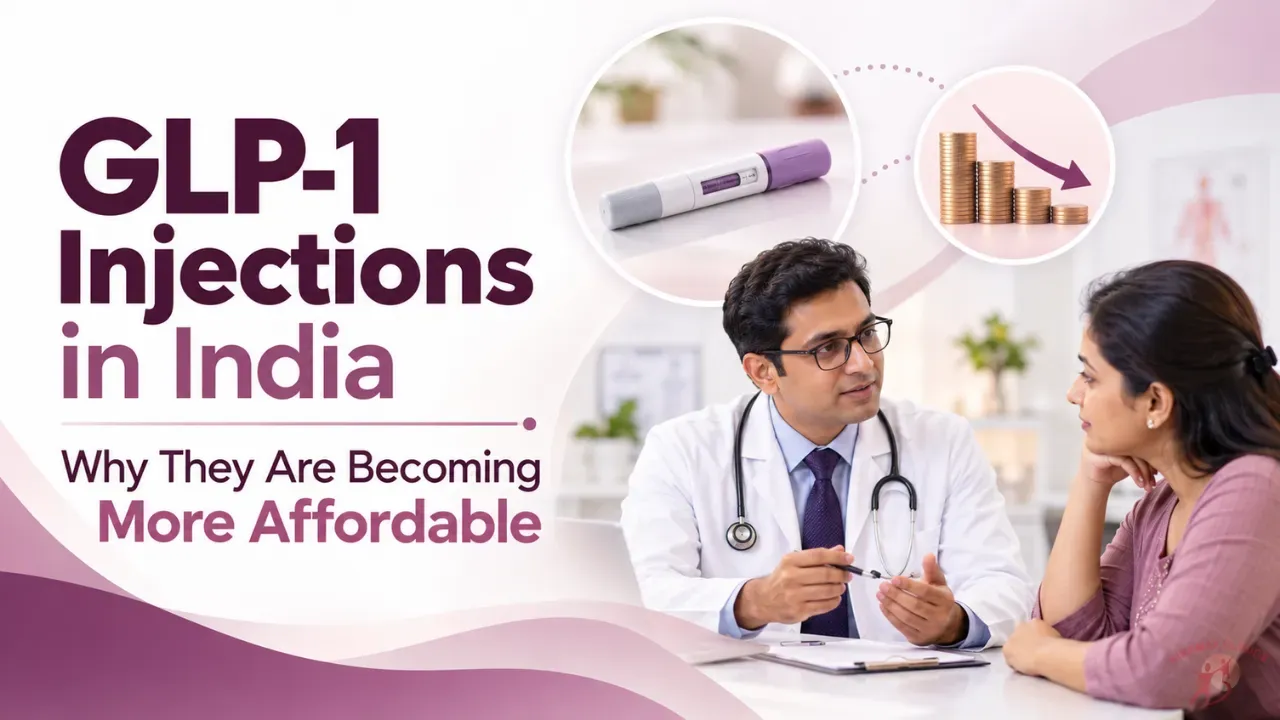
GLP-1 Injections in India: Why Prices Are Falling
Written by Dr. Ajay V. Kaduskar, Diabetologist, Nagpur

MD (Medicine), PGDHSc (Diabetology), FEACD (The Netherlands)
Published · 4 min read
Quick answer
GLP-1 medicines are becoming more affordable in India because more brands have entered the market, local manufacturing has grown, and competition has pushed prices down. The cost still varies by brand, dose and treatment duration. Always confirm current prices with your pharmacy and doctor, and do not choose a medicine on price alone.
Not long ago, GLP-1 medicines were out of reach for most Indian families. Today, more people are asking whether they can afford them. The picture has changed quickly, and understanding why helps you make a wiser decision.
What are GLP-1 medicines?
GLP-1 medicines mimic a natural gut hormone called glucagon-like peptide-1. They help the body release insulin when blood sugar is high, reduce appetite and slow stomach emptying. They are used for type 2 diabetes and, in selected people, for weight management.
Why were they so expensive before?
-
They were new, patented medicines.
-
Manufacturing a peptide medicine is complex.
-
Only a few companies sold them in India.
-
Pen devices and cold-chain storage added to the cost.
-
Demand was concentrated among a small group of patients.
What has changed?
More brands and companies
As more companies launch their own versions or similar products, patients have more choices, and competition lowers prices.
Local manufacturing
When medicines are made in India, import costs fall. Local production can also improve supply.
Patent expiry and generic or biosimilar versions
When patents expire in a market, other manufacturers can sell comparable medicines at lower prices. Regulatory approvals determine when and how this happens.
Growing awareness and volume
Greater demand encourages companies to expand supply and offer different strengths and pack sizes.
Because the market is changing fast, specific prices change often. Check the current price for your prescribed medicine.
What affects the price you pay?
-
The medicine: Different molecules cost differently.
-
The brand: Original and other brands may differ.
-
The dose: Higher doses may cost more per pen.
-
The duration: Treatment is often long-term, so the monthly cost adds up.
-
Pen design: Single-use or multi-dose pens vary in price.
-
Location and pharmacy: Taxes and margins differ.
Is a cheaper medicine always better?
No. Quality, approval status and proper storage matter. Buy only from licensed pharmacies, avoid products sold online without prescription, and never accept "repackaged" injections. A lower price is helpful only if the medicine is genuine and suitable for you.
Why does medical supervision still matter?
GLP-1 medicines are not for everyone. A doctor checks whether you are a good candidate, chooses the right medicine and dose, plans the slow increase, and monitors side effects and your other medicines. Self-medication can lead to serious problems.
How can you plan for the cost?
-
Ask your doctor for the expected total monthly cost, including follow-up.
-
Compare approved options of the same medicine, if your doctor agrees.
-
Plan for long-term use, because stopping often leads to weight regain.
-
Check whether any health insurance or employer plan covers part of the cost.
When should you see a doctor?
See a diabetologist before starting any GLP-1 medicine, particularly if you have a history of pancreatitis, gallstones, thyroid problems, kidney disease or pregnancy plans.
A quick recap
-
GLP-1 medicines have become more affordable in India due to more brands, local manufacturing and competition.
-
The final cost depends on the medicine, dose and duration.
-
Buy only genuine medicines from licensed pharmacies.
-
A doctor's supervision is essential.
-
Verify current prices before you decide.
Lower prices are good news, but they are only one part of the decision. The right medicine, the right dose and the right follow-up matter just as much. To find out whether a GLP-1 medicine suits you, consult Dr. Ajay V. Kaduskar, a diabetologist at Niramay Clinics in Nagpur.
Sources and further reading
Frequently asked questions
More brands, growing local manufacturing and market competition have brought prices down. Patent timelines and regulatory approvals also play a role. Prices change often, so check the current rate with your pharmacy.
The cost depends on the medicine, brand, dose and pen type. Because prices are changing, ask your doctor or pharmacy for the current monthly cost before starting.
You should not. These are prescription medicines that need medical evaluation and follow-up. Buying without a prescription or from unlicensed sellers risks fake products and serious side effects.
Approved medicines with the same active ingredient may work similarly, but products differ in strength, pen design and approval. Ask your doctor before switching brands.
Coverage varies. Some plans may cover them for type 2 diabetes but not for weight loss. Check your policy and speak to your insurer and doctor.
Many people need long-term treatment because weight and blood sugar often rise again after stopping. Your doctor will review your progress and discuss how long to continue.
Related reading
- Full guide: GLP-1 for diabetes and weight loss in India
- How Much Weight Can You Lose on GLP-1 Medicines?
- Is a GLP-1 Medicine Worth the Cost? A Decision Guide
- What Happens When You Stop a GLP-1 Medicine?
- GLP-1 Side Effects: Nausea, Constipation and Fixes
If you would like advice suited to your own reports and medicines, you can book an appointment or visit Niramay Clinics in Dhantoli, Nagpur.
Related services


More from the Health Library
Ready to talk to a specialist?
Call 0712 2422214 or +91 84591 41584, message us on WhatsApp, or use the appointment form. Please bring your previous reports and a list of the medicines you take.