


2D Echo (echocardiography)
2D Echo (heart ultrasound) in Dhantoli, Nagpur. What it shows, how long it takes, how to prepare, and when your doctor may advise it.
Medically reviewed by Dr. Ajay V. Kaduskar · Last reviewed 24 October 2026
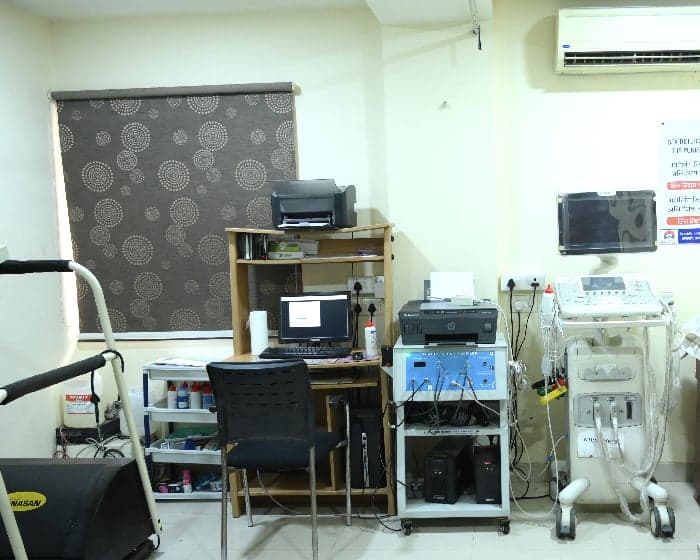
Dr. Ajay performs and reports your 2D Echo here at the clinic. It can usually be done the same day, and the report is ready in about 30 minutes.
A 2D Echo is an ultrasound scan of the heart. It shows the heart's chambers, walls and valves moving in real time, and measures how well the heart pumps. It uses sound waves, not radiation, and is safe, including in pregnancy; most people find it comfortable, with only cool gel and light probe pressure.
What a 2D Echo can show
- How strongly the heart pumps (ejection fraction)
- Thickening of the heart muscle, often from long-standing high blood pressure
- Valve problems: narrowing or leaking
- Areas of the heart wall that move poorly, which can suggest past or current reduced blood supply
- Fluid around the heart, and other structural problems
When your doctor may advise it
Breathlessness, swelling of the feet, a heart murmur, palpitations, long-standing high blood pressure or diabetes, an abnormal ECG, chest pain evaluation, or before certain treatments.
How it is done
You lie on your left side. Gel is applied to the chest and a small probe is moved over it. The test usually takes 20 to 30 minutes.
How to prepare
No fasting is needed. Take your usual medicines. Wear a two-piece outfit. Bring previous Echo or ECG reports for comparison.
When to see a doctor
Seek urgent care for chest pain, severe breathlessness, fainting or swelling of both legs with breathlessness. A 2D Echo is usually a planned test; your doctor will advise it for a murmur, breathlessness on exertion, palpitations, or before and during certain treatments.
Frequently asked questions
No. An ECG records the heart's electrical activity. An Echo is an ultrasound picture of the heart's structure and pumping. They give different information and are often done together.
Not directly. It can show effects of reduced blood supply on the heart muscle. A treadmill test, or other tests at a cardiac centre, may be needed to assess blockages.
An ECG records the heart's electrical rhythm, while a 2D Echo is an ultrasound that shows the heart's chambers, valves and pumping action. They answer different questions and are often used together.
No special preparation is needed. You can eat, drink and take your usual medicines. The scan takes about 20 to 30 minutes, and the report is discussed with you.
From our Health Library
Related services
Ready to talk to a specialist?
Call 0712 2422214 or +91 84591 41584, message us on WhatsApp, or use the appointment form. Please bring your previous reports and a list of the medicines you take.