

Metabolic Syndrome and Cardiometabolic Health
High Triglycerides, Diabetes and Obesity: What Is the Link?
Written by Dr. Ajay V. Kaduskar, Diabetologist, Nagpur

MD (Medicine), PGDHSc (Diabetology), FEACD (The Netherlands)
Published · 4 min read
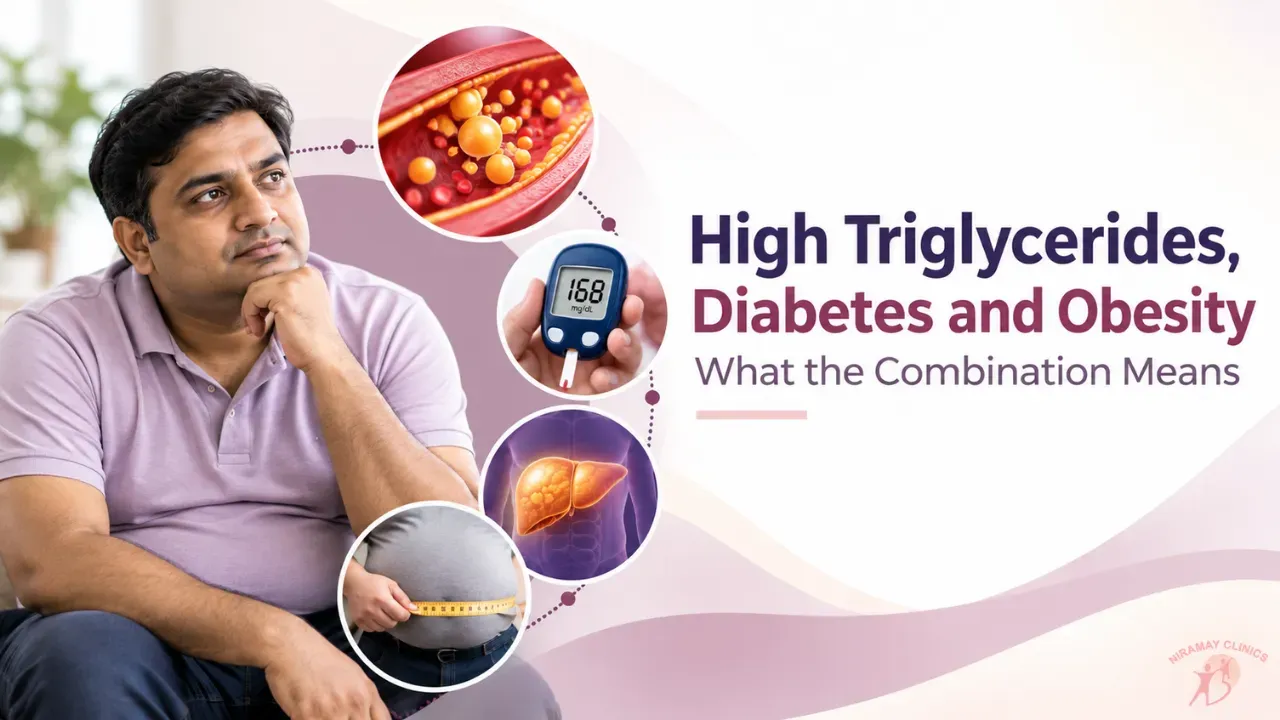
Quick answer
Insulin resistance, excess body fat, high sugar intake, refined carbohydrates, alcohol and uncontrolled diabetes can all raise triglycerides. Very high levels can cause pancreatitis, and moderately high levels raise heart risk. Weight loss, diet changes, activity, good diabetes control and sometimes medicines bring them down.
Triglycerides are a type of fat in the blood. High levels often go hand in hand with diabetes and excess weight.
Why triglycerides rise
-
Insulin resistance increases fat production in the liver
-
Excess calories, especially from sugar and refined carbohydrates
-
Alcohol
-
Poorly controlled diabetes
-
Certain medicines and conditions
-
Genetic tendencies
Why it matters
-
Higher risk of heart disease
-
Often accompanies low HDL and fatty liver
-
Very high levels can trigger acute pancreatitis
How to lower triglycerides
Diet
-
Reduce sweets, sugary drinks and refined flour
-
Limit fried and processed foods
-
Choose fish, nuts, vegetables and whole grains
-
Limit or avoid alcohol
Lifestyle
-
Lose weight
-
Exercise regularly
Medical
-
Better blood sugar control
-
Medicines when levels remain high
Testing
A fasting blood test measures triglycerides along with cholesterol. Your doctor will advise how often to repeat it.
The quick version
-
Diabetes and obesity raise triglycerides.
-
Sugar, refined carbs and alcohol worsen them.
-
Weight loss and diet changes help a lot.
-
Control of diabetes matters.
-
Very high levels need urgent care.
Triglycerides respond well to lifestyle change. For guidance, you can consult Dr. Ajay V. Kaduskar at Niramay Clinics in Nagpur.
When to seek urgent care
Seek urgent care for chest pain, breathlessness, confusion, vomiting, or symptoms of very high or very low sugar.
Sources and further reading
Frequently asked questions
Typically below 150 mg/dL, though your doctor will interpret it for you.
Excess calories and sugar often matter more than dietary fat alone.
Yes, even moderate drinking can raise them in some people.
Diet and activity can lower them within weeks.
Your doctor will advise whether fasting is needed.
Yes, they are closely related.
Related reading
- Full guide: metabolic syndrome
- What Is Metabolic Syndrome? 5 Risk Factors Explained
- Fatty Liver and Diabetes: Why They Occur Together
- Diabetes and Heart Disease: The Metabolic Risk Link
- Belly Fat, Diabetes and Metabolic Health: Why Waist Matters
- Diabetes Diet for Weight Loss: An Indian Plate Guide
- Diabetes and Kidney Disease: Which Tests You Need
If you would like advice suited to your own reports and medicines, you can book an appointment or visit Niramay Clinics in Dhantoli, Nagpur.
Related services


More from the Health Library
Ready to talk to a specialist?
Call 0712 2422214 or +91 84591 41584, message us on WhatsApp, or use the appointment form. Please bring your previous reports and a list of the medicines you take.