

Body composition analysis and sarcopenia assessment
Body composition analysis at Niramay Clinics, Nagpur: body fat, visceral fat and muscle mass, with screening for age-related muscle loss.
Medically reviewed by Dr. Ajay V. Kaduskar · Last reviewed 24 October 2026
Part of Obesity and weight management
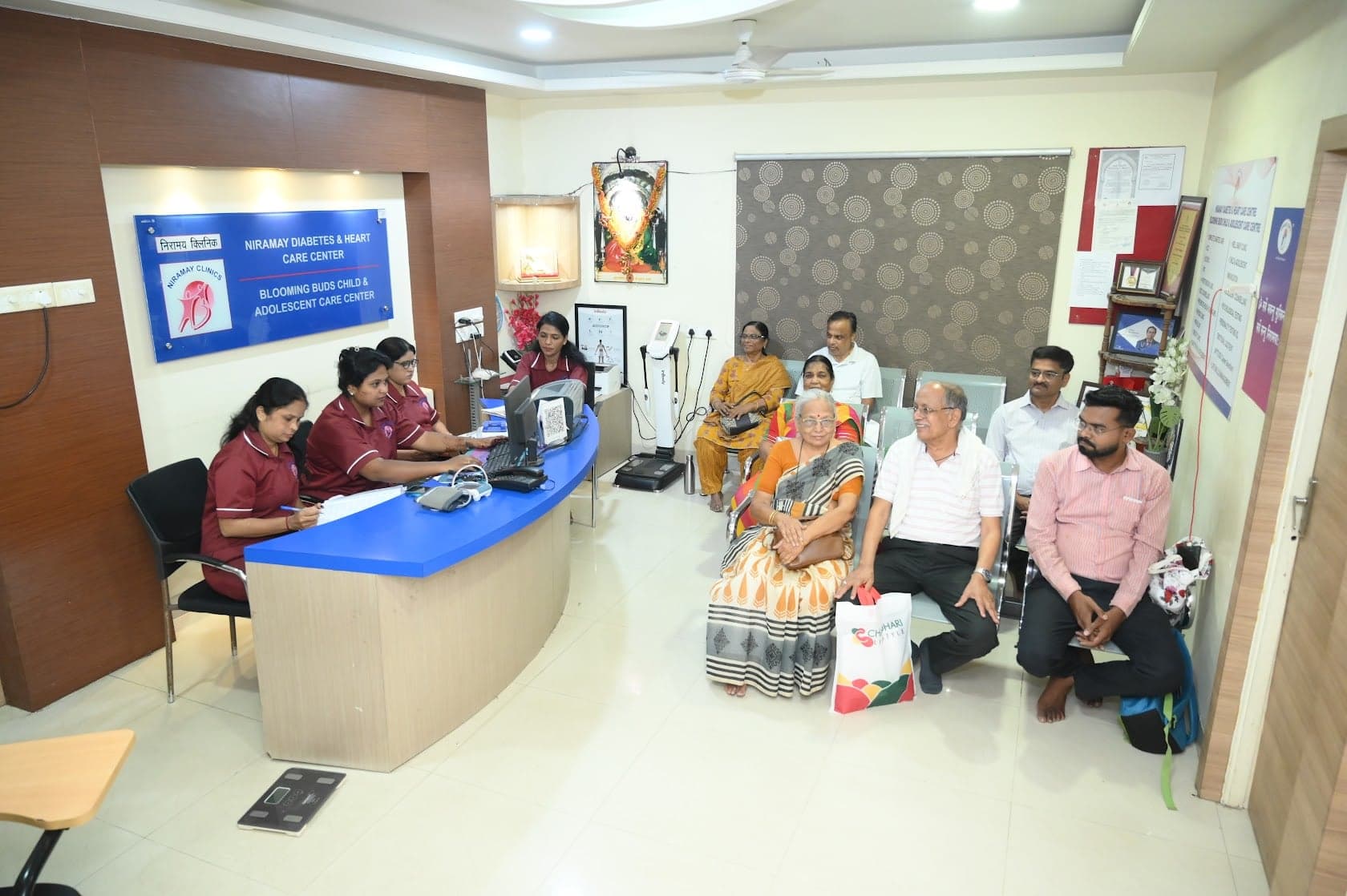
Weight alone does not tell the full story. Two people with the same weight can have very different amounts of fat and muscle. Body composition analysis measures what your weight is made of, and helps us track whether treatment is reducing fat while protecting muscle.
What body composition analysis measures
- Total body fat and body fat percentage
- Visceral fat: fat deep in the abdomen around the organs, closely linked to diabetes, fatty liver and heart risk
- Skeletal muscle mass, and how it is distributed between arms, legs and trunk
- Body water
How the test is done
You stand barefoot on a platform and hold two handles for about a minute. A very small electrical signal you cannot feel passes through the body to estimate fat, muscle and water.
How to prepare: come without a heavy meal in the previous 2 to 3 hours, empty your bladder, avoid exercise before the test, and remove metal jewellery. This test is not done for people with a pacemaker or other implanted electronic device, or during pregnancy.
Sarcopenia: when muscle is lost
Sarcopenia is the loss of muscle mass and strength. It happens with age, inactivity, illness and sometimes with rapid weight loss, and it is more common in people with diabetes. It leads to weakness, falls, slower recovery and worse sugar control.
Assessment at the clinic combines the body composition scan with simple tests of strength and physical performance:
- Body composition analyser: stand on it for about a minute; it measures muscle, fat and water
- Hand grip strength
- Chair stand test: stand up from a chair 5 times
- Walking speed over a short distance
Wear light clothes, avoid a heavy meal just before, and remove socks and metal items for the scan. If you have a pacemaker, please tell us first.
Who should get checked
- People with diabetes, especially over 50
- Anyone on a weight-loss programme or weight-loss medicine
- Older adults with weakness, falls or slowed walking
- People with a "normal" weight but a large waist
What helps protect muscle
Enough protein through the day, regular strength exercise, adequate vitamin D, staying active, and treating underlying conditions. Your plan will be based on your results.
Frequently asked questions
Yes. It uses a very small electrical signal you cannot feel to estimate fat, muscle and water. It is not done if you have a pacemaker or implanted device, and we will ask first.
Best readings come on an empty bladder, a few hours after a meal, without heavy exercise just before. Normal morning clothing is fine; you will remove footwear and socks.
Anyone managing weight, people with diabetes or sarcopenia risk, older adults losing strength, and patients who want to track real fat and muscle change rather than only the weighing scale.
The scan itself takes only a few minutes. Most of the visit is spent going through your report with the doctor or nutritionist so you understand what the fat, muscle and water numbers mean for you.
Weight and BMI cannot separate fat from muscle. The analysis shows how much of your weight is fat, where it sits, and whether you have enough muscle - so progress is measured by real body change, not only the scale.
From our Health Library
Related services


Ready to talk to a specialist?
Call 0712 2422214 or +91 84591 41584, message us on WhatsApp, or use the appointment form. Please bring your previous reports and a list of the medicines you take.