

Metabolic Syndrome and Cardiometabolic Health
Metabolic Syndrome, Fatty Liver & Cardiometabolic Health: The Diabetes-Heart-Kidney Connection
Written by Dr. Ajay V. Kaduskar, Diabetologist, Nagpur

MD (Medicine), PGDHSc (Diabetology), FEACD (The Netherlands)
Published · 15 minutes
Quick answer
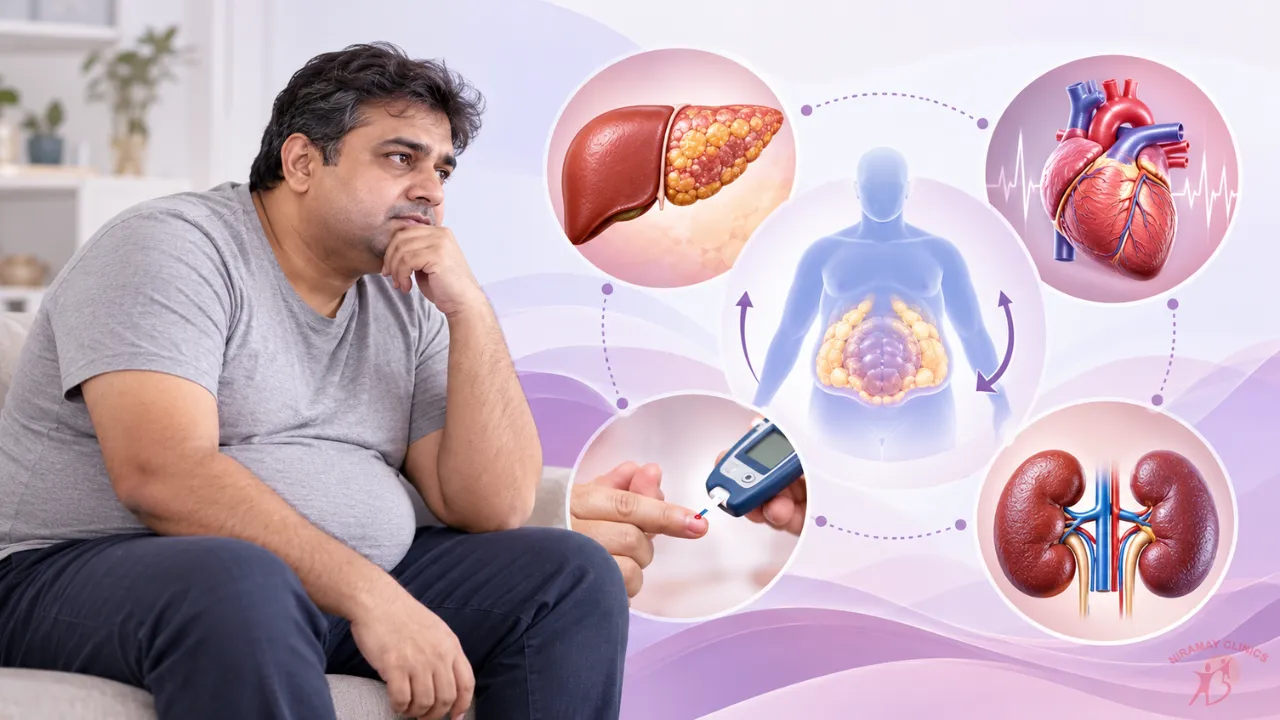
Metabolic syndrome is diagnosed when a person has at least three of five risk factors: a large waist, high triglycerides, low HDL cholesterol, raised blood pressure and raised fasting blood sugar. Insulin resistance links most of them. The same process drives fatty liver (now called MASLD) and raises the long-term risk of Type 2 diabetes, heart attack, stroke, heart failure and chronic kidney disease. Found early, much of this risk can be brought down.
Metabolic syndrome is the name doctors give to a group of problems that tend to turn up together: extra fat around the waist, raised blood sugar, high blood pressure, high triglycerides and low HDL (good) cholesterol. If you have three or more of these, you have metabolic syndrome, and your chances of developing Type 2 diabetes, heart disease, stroke, fatty liver and kidney disease are higher than they would be from any one of them alone.
In clinic, it rarely arrives as a single diagnosis. More often a patient comes in with a small pile of reports. The ultrasound mentions "grade 1 fatty liver". The sugar is "slightly high". Blood pressure was 138/88 at the chemist last week, and the lipid profile has triglycerides printed in bold. Each was probably mentioned to them as a separate, minor issue.
They usually aren't separate. This article explains how they connect, which tests are actually useful, what treatment looks like, and which symptoms mean you shouldn't wait.
What is metabolic syndrome?
It isn't one disease. It's a pattern of risk factors that feed off each other, and together they do more damage to blood vessels and organs than you'd expect from adding up the individual numbers.
Most people with metabolic syndrome feel completely fine. There's no pain and often no warning, which is precisely the problem. The changes build up quietly in the arteries, liver and kidneys for years.
Older books and websites sometimes call it Syndrome X or insulin resistance syndrome. Same thing.
What are the 5 criteria for metabolic syndrome?
Doctors look for three or more of the following. The waist figures used for Indian adults are lower than the ones you'll see in Western sources, and there's a good reason for that, explained just below the table.
| Risk factor | Threshold commonly used for Indian adults |
|---|---|
| Waist circumference | 90 cm or more (men), 80 cm or more (women) |
| Triglycerides | 150 mg/dL or higher, or already on treatment |
| HDL cholesterol | Under 40 mg/dL (men), under 50 mg/dL (women), or on treatment |
| Blood pressure | 130/85 mmHg or higher, or on BP medicine |
| Fasting blood glucose | 100 mg/dL or higher, or on treatment for high sugar |
Medical organisations don't all use identical definitions, so your doctor will read your numbers alongside the rest of your history rather than ticking boxes.
Why are the waist limits lower for Indians?
Indians, and South Asians generally, tend to store more fat deep inside the abdomen, packed around the liver, pancreas and gut. This visceral fat is far more active than the fat you can pinch under the skin, and it has a much stronger link with insulin resistance.
So someone can have a normal BMI, look slim in a photograph, and still carry enough visceral fat to push their sugar and triglycerides up. People sometimes call this the "thin-fat" Indian body type. A measuring tape around the waist often picks it up when the weighing scale doesn't.
What causes metabolic syndrome?
Why is insulin resistance at the centre of it?
Insulin is the hormone that lets glucose move out of the blood and into your muscles, liver and fat cells. With insulin resistance, those cells stop responding to it as well as they should. The pancreas notices blood sugar creeping up and simply makes more insulin to compensate.
For quite a while, that works. A fasting sugar report can look perfectly normal while insulin levels are running high in the background. But high insulin and resistant cells don't stay contained. The liver starts making extra fat and triglycerides, and keeps some of that fat for itself. HDL drifts down. The kidneys hold on to more salt, and blood pressure edges up. The lining of the blood vessels slowly becomes less healthy.
Eventually the pancreas can't keep pace. Sugar rises into the prediabetes range, and later, for many people, into diabetes.
What makes someone more likely to develop insulin resistance?
Some of it is inherited. A parent or sibling with diabetes or early heart disease raises your risk, and South Asian ancestry does too. Age plays a part. So does where your body stores fat, which is largely something you're born with.
Other contributors are about daily life: long hours sitting at a desk or behind the wheel, meals built mostly around refined carbohydrates, sweetened drinks, fried snacks, short or broken sleep, and ongoing stress. Untreated sleep apnoea is a surprisingly common and often missed factor.
Certain medical conditions and medicines matter as well. PCOS, an underactive thyroid, long-term steroid use and some psychiatric medicines can all worsen insulin resistance. There's also evidence linking low birth weight and early-life nutrition to metabolic problems in adulthood.
None of this comes down to willpower. Two people can eat the same food, walk the same distance and end up with very different blood reports.
What are the symptoms of metabolic syndrome?
Usually there aren't any that you'd notice. It gets picked up on a waist measurement, a routine blood pressure check or a health package blood test.
That said, a few things can hint at insulin resistance. Dark, velvety patches of skin on the back of the neck, in the armpits or the groin (a condition called acanthosis nigricans) are a fairly reliable clue. Small skin tags around the neck are common. Some people feel heavy and sleepy after meals. A waistline that keeps growing even though weight has barely changed is worth paying attention to. In women, irregular periods, acne or unwanted facial hair may point to PCOS, which often travels with insulin resistance. Loud snoring with daytime tiredness raises the question of sleep apnoea.
Once blood sugar has climbed into the diabetes range, the more familiar symptoms can show up: thirst, passing urine often, blurred vision, or weight loss you can't explain.
Who is at higher risk?
It's worth getting checked if your waist is above the limits in the table, or if your BMI is 23 or more (the overweight cut-off generally used for Asian adults). The same applies if you already have prediabetes, diabetes, high blood pressure, abnormal cholesterol or fatty liver on a scan.
A history of gestational diabetes or PCOS puts women in the higher-risk group. So does a close family history of diabetes or early heart attacks, a largely sedentary job, and heavy snoring.
Fatty liver and metabolic syndrome: how are they connected?
What is MASLD?
MASLD stands for metabolic dysfunction-associated steatotic liver disease. It's the newer name, adopted in 2023, for what used to be called non-alcoholic fatty liver disease or NAFLD. The rename wasn't just cosmetic. The old name described the condition by what it wasn't (alcohol-related). The new one names what actually drives it: excess weight, insulin resistance, diabetes, high blood pressure and abnormal lipids.
A person is said to have MASLD when there's extra fat in the liver along with at least one of those metabolic risk factors, and no other obvious cause such as heavy drinking.
Why do fatty liver and diabetes so often go together?
The liver is where a lot of metabolism happens. With insulin resistance, it receives a constant stream of fatty acids from abdominal fat and also makes new fat from excess sugar. Some of that fat stays put, inside the liver cells.
Then the fatty liver itself becomes insulin resistant. It releases more glucose into the bloodstream than it should, especially overnight, and pushes out more triglyceride-rich particles. So the relationship runs both ways. Metabolic syndrome leads to fatty liver, and fatty liver makes blood sugar and lipids harder to control.
That's why a large share of people with Type 2 diabetes turn out to have fatty liver, and why someone diagnosed with fatty liver should have their sugar checked.
What are the stages of fatty liver disease?
| Stage | What's happening |
|---|---|
| Steatosis (MASLD) | Fat has built up in liver cells, usually without inflammation |
| MASH (formerly NASH) | Fat plus inflammation and damage to liver cells |
| Fibrosis | Scar tissue starts forming because of ongoing injury |
| Cirrhosis | Scarring is advanced and the liver's structure and function change |
Most people with fatty liver stay at the first stage. The thing that predicts who will run into liver trouble later is the amount of fibrosis, or scarring. The words "fatty liver" on an ultrasound report don't tell you that.
My liver tests are normal. does fatty liver still matter?
It can. Liver enzymes such as ALT and AST are often completely normal in people with significant fat, and sometimes even with scarring. Ultrasound is good at spotting moderate or heavy fat, but it can't measure scarring reliably.
To get a sense of fibrosis risk, doctors often start with the FIB-4 score, a calculation that uses your age, AST, ALT and platelet count from routine blood tests. If that comes back in the uncertain or higher range, a liver stiffness scan (elastography, such as FibroScan) is the usual next step. It is non-invasive and takes a few minutes. Some people will need further tests or a liver specialist's opinion.
One thing surprises many patients. In people with MASLD, the heart is often at greater risk than the liver. A fatty liver report is a good prompt to look at blood pressure, cholesterol and sugar too, not only at the liver.
How does metabolic syndrome affect the heart?
Why does it raise the risk of heart attack and stroke?
Every part of metabolic syndrome harms blood vessels, just in slightly different ways. High blood pressure puts constant strain on artery walls. High triglycerides and low HDL usually come with smaller, denser LDL particles, and those slip into artery walls more easily. Raised sugar damages the inner lining of vessels. Visceral fat keeps releasing inflammatory chemicals into the circulation.
Put together, these speed up atherosclerosis, the slow build-up of fatty plaque inside arteries. In the arteries supplying the heart, it can cause angina or a heart attack. In the brain, it can cause a stroke. In the legs, it can reduce blood flow and cause pain on walking.
How is diabetes linked to heart failure?
Heart failure means the heart can't pump or fill as well as the body needs. It doesn't mean the heart has stopped. Diabetes, high blood pressure, obesity and kidney disease each raise the risk, and it can develop even when the coronary arteries aren't significantly blocked.
Early signs tend to be vague: getting breathless on stairs you used to manage easily, swollen ankles by evening, or tiredness that doesn't match how much you've done.
Can people with diabetes have a heart attack without chest pain?
Yes, and it happens more often than people expect. In long-standing diabetes, particularly where there's nerve damage, a heart attack may show up as breathlessness, sweating, sudden exhaustion, nausea, or discomfort in the jaw, arm or upper abdomen rather than classic crushing chest pain. These symptoms deserve the same urgency.
How does metabolic syndrome affect the kidneys?
Why are diabetes and high blood pressure so hard on the kidneys?
Each kidney filters blood through around a million tiny filtering units, each built around a knot of very small blood vessels. Years of high sugar and high blood pressure wear those vessels down. Excess weight and insulin resistance make the kidneys work harder still.
Worldwide, diabetes and hypertension are the two biggest causes of chronic kidney disease. The early stages cause no symptoms at all. By the time swelling or reduced urine appears, a lot of function may already be lost, which is why testing matters so much here.
Which kidney tests should you have?
Two tests do most of the work, and they're both simple.
| Test | What it looks at | Why it's useful |
|---|---|---|
| Urine albumin-to-creatinine ratio (UACR) | Small amounts of albumin, a protein, leaking into urine | Usually the earliest sign of kidney damage, and also a marker of higher heart risk |
| Serum creatinine with eGFR | How well the kidneys are filtering blood | Shows whether filtering capacity has dropped |
If you have diabetes, both are generally recommended at least once a year, and more often when results are abnormal. A standard urine routine test (dipstick) isn't sensitive enough to catch early albumin leakage, so it isn't a substitute for UACR.
The diabetes-heart-kidney connection
Doctors increasingly talk about cardiovascular-kidney-metabolic health, or CKM, because these organs don't get sick in isolation. Damaged kidneys push blood pressure up, which strains the heart. A weakened heart sends less blood to the kidneys. Diabetes and fatty liver worsen cholesterol and inflammation, affecting both. And albumin in the urine turns out to be a warning sign for the heart, not just the kidneys.
For patients, the practical upshot is that good care looks at all of it together. It's also why some of the newer diabetes medicines are chosen not only for their effect on sugar but because they've been shown to protect the heart or kidneys in suitable people.
How is metabolic syndrome diagnosed?
There's no single test. Diagnosis comes from putting together a basic examination and a set of blood and urine results.
The examination part is quick: waist circumference, weight, height, BMI and blood pressure. Your doctor may ask you to record BP at home for a week, since clinic readings can run high.
Blood tests usually include fasting glucose and HbA1c (sometimes an oral glucose tolerance test), a full lipid profile with triglycerides, HDL, LDL and non-HDL cholesterol, and liver function tests. For kidneys, UACR and creatinine with eGFR. Thyroid tests are added if there's a reason to suspect a problem.
Depending on what turns up, you might also need an ultrasound or elastography of the liver, an ECG and other heart tests, a sleep study if sleep apnoea seems likely, and an eye examination if you have diabetes.
Not everyone needs every test. Your age, symptoms and existing reports decide what's sensible.
What are the treatment options?
The aim is to protect the heart, liver, kidneys and brain over the long term. Getting individual numbers into range is part of that, but it's a means rather than the goal. Lifestyle change is the base for nearly everyone, and medicines are added when risk is already high or targets aren't being reached.
Lifestyle management
The useful thing about lifestyle changes is that they work on several problems at the same time. One improvement in daily routine can nudge sugar, blood pressure, triglycerides and liver fat all in the right direction.
Weight loss helps even in fairly small amounts. Liver guidelines often cite a loss of around 5% of body weight as enough to reduce liver fat, and 7 to 10% as the range where inflammation and, in some people, early scarring can improve. For someone weighing 80 kg, 5% is 4 kg. That tends to feel far more achievable than an "ideal weight" figure pulled from a chart. And if the scale moves slowly but your waist is shrinking, that still counts.
Sleep deserves more attention than it gets. Short or poor sleep worsens insulin resistance and increases hunger the next day. If you snore loudly or wake up unrefreshed, ask about sleep apnoea. It's common in people with metabolic syndrome and very treatable.
Alcohol adds directly to liver injury and pushes triglycerides up, so people with fatty liver are usually advised to cut it down sharply or stop. Stopping smoking is one of the single most effective things anyone can do for their heart and kidneys.
Nutrition
No one diet suits every person with metabolic syndrome, and anyone who tells you otherwise is overselling. Some changes do help most people, though, and they fit reasonably well into a normal Indian kitchen.
Start with the refined carbohydrates. Maida-based snacks, white bread, biscuits and large mounds of polished rice raise sugar and triglycerides quickly. You don't have to give up rice or roti. Reducing the portion and filling more of the plate with vegetables, dal and a protein source usually works better than a ban you can't sustain.
Fibre helps, from vegetables, pulses, whole grains and millets such as jowar and bajra. Protein at each meal keeps you fuller for longer; depending on your diet, that could be dal, chana, curd, paneer, eggs, fish or chicken.
Sweetened drinks and packaged juices are worth singling out, because they're strongly tied to fatty liver and high triglycerides. Whole fruit in sensible amounts is a better choice than juice. Deep-fried food and bakery items made with trans fats are best kept occasional. Cutting back on salt, including the hidden salt in pickles, papad and namkeen, helps blood pressure.
A dietitian can turn these ideas into a plan that fits your food habits, family meals and budget.
Physical activity
Exercise makes muscles more sensitive to insulin, and that effect starts before any weight comes off.
Brisk walking, cycling or swimming, building up towards roughly 150 minutes a week, is the figure most guidelines use. Strength training twice a week or more helps your muscles take up glucose. If you sit for long stretches at work, getting up for a few minutes every half hour to an hour makes a measurable difference. A 10 to 15 minute walk after your main meals can flatten the sugar spike that follows.
Speak to your doctor before starting something new if you have heart disease, chest discomfort on exertion, poorly controlled blood pressure, advanced diabetes complications or joint problems.
Medicines
Medicines come in when lifestyle changes aren't enough by themselves or when risk is already high. Which ones depends entirely on your profile, and the list below is general information rather than a prescription.
For blood sugar, metformin is often the starting point. Two newer groups, SGLT2 inhibitors and GLP-1 receptor agonists, have been shown in suitable patients to protect the heart and/or kidneys as well as lowering sugar. Statins are the mainstay for lowering LDL cholesterol and cardiovascular risk, and other lipid medicines can be added if needed. There are several classes of blood pressure medicine; when there's albumin in the urine, doctors often prefer ACE inhibitors or ARBs because they also help protect the kidneys.
Some people with obesity may benefit from anti-obesity medication, including GLP-1, based treatments, under medical supervision. For fatty liver specifically, research into medicines for MASH with scarring has moved fast, and a few have been approved in some countries. Whether they're available and appropriate for you in India is a conversation to have with your doctor.
Please don't start, stop or change the dose of any of these on your own. Several need periodic blood tests or kidney monitoring.
Monitoring and follow-up
Metabolic syndrome is long-term, and a lot of the benefit comes from steady follow-up rather than one big consultation. Waist, weight and blood pressure are usually checked at each visit. If you have diabetes, HbA1c is typically repeated every three to six months, kidney tests at least once a year, and eyes and feet examined regularly. Lipids are rechecked yearly or after a change in treatment. People with fatty liver may have their fibrosis risk reassessed from time to time.
What happens if metabolic syndrome isn't treated?
It tends to progress. Over a number of years, prediabetes can turn into Type 2 diabetes. Plaque in the arteries can lead to a heart attack or stroke. Heart failure becomes more likely. Kidney function can decline gradually, and in advanced cases dialysis may eventually be needed. Some people with fatty liver move on to inflammation, scarring and cirrhosis. Obesity and fatty liver are also linked to a higher risk of certain cancers.
That's a list of possibilities, not a forecast. Plenty of people with metabolic syndrome never develop these complications, and the risk can be lowered at almost any point.
How can complications be prevented?
Mostly by not relying on any one number. Know your waist size, blood pressure, HbA1c, lipid profile, UACR and eGFR, and agree on targets with your doctor. Work on changes you can keep up for years rather than weeks. Take prescribed medicines regularly, and if something causes side effects, tell your doctor instead of quietly stopping it. Get checked for liver scarring, kidney damage and heart risk early rather than waiting for symptoms. And keep your follow-up appointments, particularly when you're feeling well, because that's exactly when these conditions progress unnoticed.
Common myths about metabolic syndrome and fatty liver
"I'm not fat, so this can't be me." Many Indians develop metabolic syndrome at a normal BMI because of visceral fat. Waist size and blood tests give a more honest picture than weight.
"Fatty liver is an alcohol problem." MASLD is driven mainly by metabolic factors. Lots of people who barely drink have it.
"Everyone has fatty liver, so it's nothing." It is common, and most people won't develop serious liver disease. Some will, though, and fatty liver also signals higher heart and diabetes risk. Common isn't the same as harmless.
"My sugar is under control, so my heart and kidneys are fine." Blood pressure, cholesterol, kidney function, smoking and activity levels all count. Sugar is one piece.
"I'm on tablets now, so diet and exercise matter less." Medicines work best on top of lifestyle changes, not instead of them.
"A herbal detox will clean my liver." No supplement has been shown to replace proper evaluation and treatment, and some herbal products can injure the liver.
When should you see a doctor?
Book a metabolic check-up if your waist is above the limits mentioned earlier, if you've been told you have fatty liver, prediabetes, diabetes, high blood pressure, high triglycerides or low HDL, or if you've had gestational diabetes or have PCOS. A strong family history of diabetes or early heart disease is reason enough on its own.
When do you need emergency care?
Go to an emergency department straight away for chest pain, pressure or tightness, especially if it spreads to the arm, jaw or back or comes with sweating or breathlessness. The same applies to sudden breathlessness, or breathlessness that's worse lying flat.
Sudden weakness or numbness on one side of the face or body, slurred speech, a drooping face or sudden loss of vision can mean a stroke. Every minute counts.
Yellow eyes or skin, vomiting blood, black tarry stools or new confusion can signal serious liver trouble. Rapidly increasing swelling of the belly or legs, very high sugar with vomiting, drowsiness or dehydration, or a sharp drop in how much urine you're passing also need prompt medical attention.
Points to keep
-
Three or more of five risk factors (large waist, high triglycerides, low HDL, raised blood pressure, raised fasting sugar) means metabolic syndrome.
-
Indians run into metabolic trouble at smaller waist sizes and lower BMI than Western populations.
-
Insulin resistance ties together metabolic syndrome, fatty liver, Type 2 diabetes, heart disease and kidney disease.
-
Normal liver enzymes don't rule out fatty liver. Scarring risk matters more than the ultrasound label.
-
UACR and eGFR are the two yearly kidney tests worth insisting on if you have diabetes.
-
Lifestyle change is the base of treatment; medicines are added according to individual risk.
-
Chest pain, stroke symptoms, jaundice or sudden breathlessness need emergency care.
A stack of borderline reports can feel like five separate problems, each needing its own fix. More often they're one problem showing up in five places. That's actually encouraging, because the same handful of steps (better sleep, more movement, smaller portions of refined carbs, a smaller waist, and the right medicines when they're needed) tends to improve several of them at once.
Metabolic syndrome is common. It isn't a fixed sentence. People who find it early and keep at the basics often lower their risk of diabetes, heart disease, liver damage and kidney disease a great deal.
Sources and further reading
Frequently asked questions
The five criteria are a waist of 90 cm or more in Indian men or 80 cm or more in Indian women, triglycerides of 150 mg/dL or above, HDL below 40 mg/dL in men or 50 mg/dL in women, blood pressure of 130/85 mmHg or higher, and fasting sugar of 100 mg/dL or higher. Three or more usually means metabolic syndrome. Most people feel nothing, so it's found through testing.
Many people bring some or all of the five risk factors back into the normal range, mainly through losing weight around the waist, staying active, sleeping better and taking medicines where needed. Even modest weight loss helps. The underlying tendency toward insulin resistance usually stays, though, so the habits and periodic check-ups need to continue to keep the risk down.
Not on its own, but the two are closely connected. Both come from insulin resistance, and a fatty liver releases extra glucose into the blood. People with fatty liver are more likely to develop prediabetes or Type 2 diabetes, which is why a fasting sugar and HbA1c test is usually advised once fatty liver shows up on an ultrasound.
MASLD (metabolic dysfunction-associated steatotic liver disease) replaced the older term NAFLD (non-alcoholic fatty liver disease) in 2023. The new name points to the real drivers of the condition, such as insulin resistance, obesity, diabetes, high blood pressure and abnormal lipids, rather than defining it only by the absence of alcohol. Most people once told they had NAFLD now fall under MASLD.
The urine albumin-to-creatinine ratio (UACR) picks up small amounts of protein leaking into the urine, often the first sign of damage. Serum creatinine with eGFR shows how well the kidneys are filtering. People with diabetes are generally advised to have both at least yearly, because early kidney disease causes no symptoms and a routine urine test can miss it.
Each component damages arteries in its own way. High blood pressure strains the walls, high triglycerides and low HDL help plaque form, high sugar injures the vessel lining, and abdominal fat releases inflammatory chemicals. The result is faster narrowing of the arteries, which is what leads to heart attacks and strokes. The combined effect is larger than any single factor.
Yes, and it's common in India. Many people with a normal BMI carry fat deep inside the abdomen, around the liver and other organs, and this visceral fat is strongly tied to insulin resistance. That's why doctors measure the waist and check blood tests instead of relying on weight alone, particularly when diabetes runs in the family.
Liver guidelines commonly note that losing about 5% of body weight can reduce liver fat, while around 7 to 10% may improve inflammation and, in some people, early scarring. Slow, steady loss is preferred over crash dieting, which isn't recommended. Your doctor can help set a target that suits your overall health.
Related reading
- What Is Metabolic Syndrome? 5 Risk Factors Explained
- Fatty Liver and Diabetes: Why They Occur Together
- Diabetes and Kidney Disease: Which Tests You Need
- Diabetes and Heart Disease: The Metabolic Risk Link
- High Triglycerides, Diabetes and Obesity: What Is the Link?
Related guides: Type 2 Diabetes
If you would like advice suited to your own reports and medicines, you can book an appointment or visit Niramay Clinics in Dhantoli, Nagpur.
Related services


More from the Health Library
Ready to talk to a specialist?
Call 0712 2422214 or +91 84591 41584, message us on WhatsApp, or use the appointment form. Please bring your previous reports and a list of the medicines you take.