
Gestational Diabetes
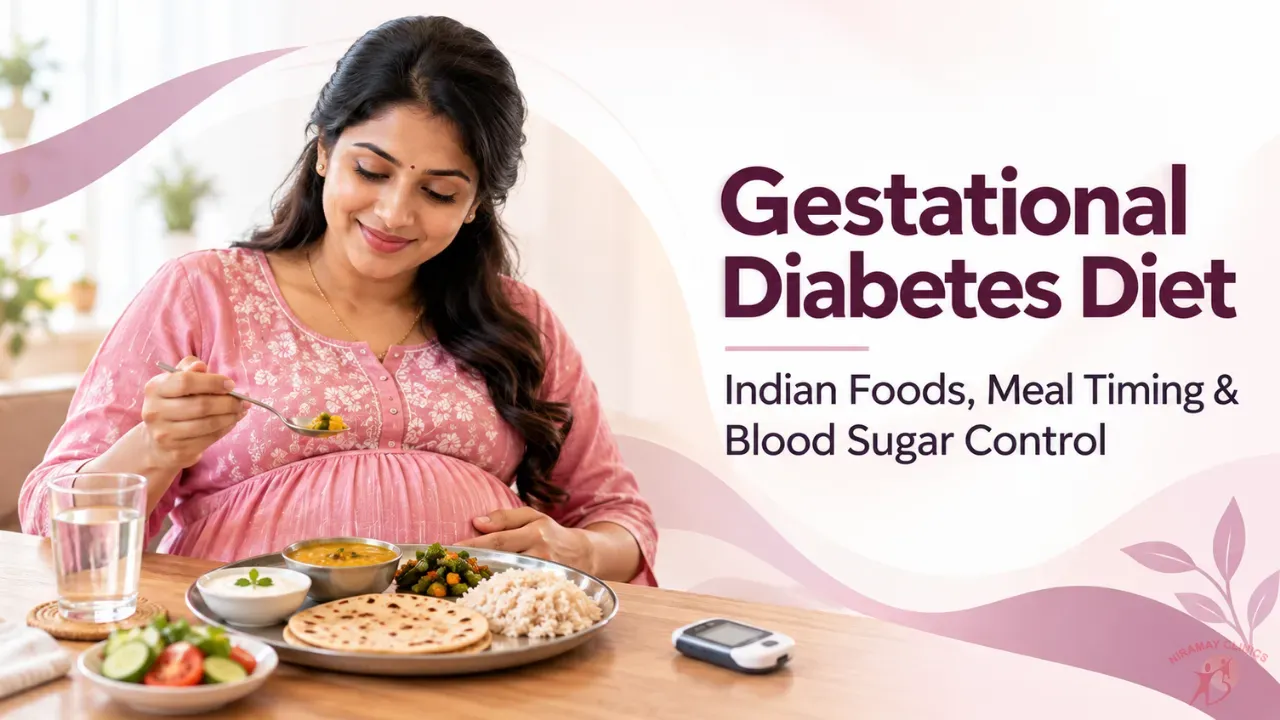
Gestational Diabetes Diet: Indian Foods and Meal Timing
Written by Dr. Ajay V. Kaduskar, Diabetologist, Nagpur

MD (Medicine), PGDHSc (Diabetology), FEACD (The Netherlands)
Published · 5 min read
Quick answer
A gestational diabetes diet includes three small meals and two to three snacks, with controlled portions of carbohydrates, plenty of vegetables, protein at each meal and healthy fats. Choose whole grains and pulses, limit sweets and refined foods, avoid fruit juices, and walk after meals. Do not skip meals or follow extreme diets. Ask your dietitian for a personal plan.
Food is the most powerful tool for controlling gestational diabetes. You do not need to give up Indian food. You need to adjust portions, balance your plate and space meals through the day.
What are the goals?
-
Keep sugars within your target range
-
Provide enough nutrition and calories for you and the baby
-
Prevent ketones, which can form if you skip meals or eat too little carbohydrate
-
Achieve healthy pregnancy weight gain
How should you build your plate?
-
Half the plate: Non-starchy vegetables such as spinach, gourd, beans, cabbage, cauliflower, tomatoes and salad.
-
One quarter: Protein such as dal, sprouts, paneer, eggs, fish, chicken, curd or tofu.
-
One quarter: Carbohydrates, preferably whole grains such as roti, jowar, bajra, ragi, brown rice or millets.
-
Add a small amount of healthy fat such as nuts, seeds or a teaspoon of ghee or oil.
What is a sample meal pattern?
Early morning
A glass of milk with no sugar, or a few soaked almonds.
Breakfast
Vegetable besan chilla, moong dal cheela, vegetable upma with extra vegetables, idli with sambar or whole-wheat toast with egg. Avoid white bread with jam, poha without vegetables and sweet cereals.
Mid-morning snack
A small fruit portion (such as guava or apple) with a few nuts, or roasted chana.
Lunch
One or two rotis or a small cup of cooked rice, dal, a large serving of vegetables, salad and curd.
Evening snack
Sprouts chaat, buttermilk, makhana or a handful of nuts.
Dinner
Similar to lunch but lighter: vegetable soup, roti with sabzi and dal or paneer.
Bedtime snack
A glass of milk or a small portion of curd with nuts. This prevents long overnight fasting.
Which foods should you limit?
-
Sweets, mithai, cakes and biscuits
-
Sugary drinks, packaged juices and soft drinks
-
White rice, maida products and large portions of potatoes
-
Fried snacks and fast food
-
Dry fruits in large amounts
-
Overripe or very sweet fruits like mango, grapes and banana in large portions
Fruit is allowed in measured portions. Eat it with protein or nuts, and not as juice.
What about timing?
-
Eat every 2 to 3 hours.
-
Do not skip breakfast.
-
Many women have higher sugars in the morning, so breakfast may need a lower carbohydrate portion.
-
Take a 10 to 15 minute walk after meals.
-
Space the last meal at least two hours before sleep.
How do you monitor?
Check your sugar fasting and one or two hours after meals, as your doctor advises. Targets are usually fasting below 95 mg/dL, one hour below 140 mg/dL and two hours below 120 mg/dL. Your doctor may set different targets. Keep a diary of foods and readings to identify which items raise your sugar.
Do you need supplements?
Continue prenatal vitamins, iron, calcium and folic acid as advised. Ask your doctor before starting any herbal or "sugar-control" products.
When should you see a doctor?
Contact your doctor if your readings are repeatedly above target, you feel very hungry or weak, you have ketones in the urine, you vomit often or you have reduced baby movements.
The quick version
-
Eat three meals and two to three snacks with balanced portions.
-
Fill half your plate with vegetables, add protein, and limit refined carbohydrates.
-
Avoid sweets, sugary drinks and juices.
-
Walk after meals and avoid skipping meals.
-
Monitor your sugar and review the diary with your doctor.
You can enjoy home food and still keep sugars steady. Small changes add up to a healthy pregnancy. For a personalised plan, consult Dr. Ajay V. Kaduskar, a diabetologist at Niramay Clinics in Nagpur.
Sources and further reading
Frequently asked questions
Choose protein-rich options such as moong dal cheela, besan chilla, vegetable upma, eggs with whole-wheat toast or idli with sambar. Keep carbohydrate portions small, since morning sugars can be higher.
Yes, in a small portion, such as half to one cup cooked, with dal, vegetables and protein. Brown rice or millets may be better. Check your sugar readings to see your response.
Guava, apple, papaya, pear, berries and orange in small portions, taken with nuts or curd. Avoid juices, and limit mango, grapes, banana and chikoo.
Yes. Milk is a good source of calcium and protein. Have it without sugar, and count it as part of your carbohydrate intake. A glass at bedtime can help prevent night-time dips.
Three main meals and two to three snacks, spaced 2 to 3 hours apart, usually work well. Do not skip meals.
For many women, yes, along with activity. If sugars stay above target despite good diet, your doctor may add insulin or medicines.
Related reading
- Full guide: gestational diabetes
- Gestational Diabetes Test: When and What Results Mean
- When Is Insulin Needed in Gestational Diabetes?
- Does Gestational Diabetes Go Away After Delivery?
- Diabetes Diet for Indians: What to Eat, What to Limit & How to Build a Practical Meal Plan
- After Gestational Diabetes: When to Test for Type 2
If you would like advice suited to your own reports and medicines, you can book an appointment or visit Niramay Clinics in Dhantoli, Nagpur.
Related services


More from the Health Library
Ready to talk to a specialist?
Call 0712 2422214 or +91 84591 41584, message us on WhatsApp, or use the appointment form. Please bring your previous reports and a list of the medicines you take.