

Diabetes Diet for Indians
Diabetes Diet for Indians: What to Eat, What to Limit & How to Build a Practical Meal Plan
Written by Dr. Ajay V. Kaduskar, Diabetologist, Nagpur

MD (Medicine), PGDHSc (Diabetology), FEACD (The Netherlands)
Published · 20 min
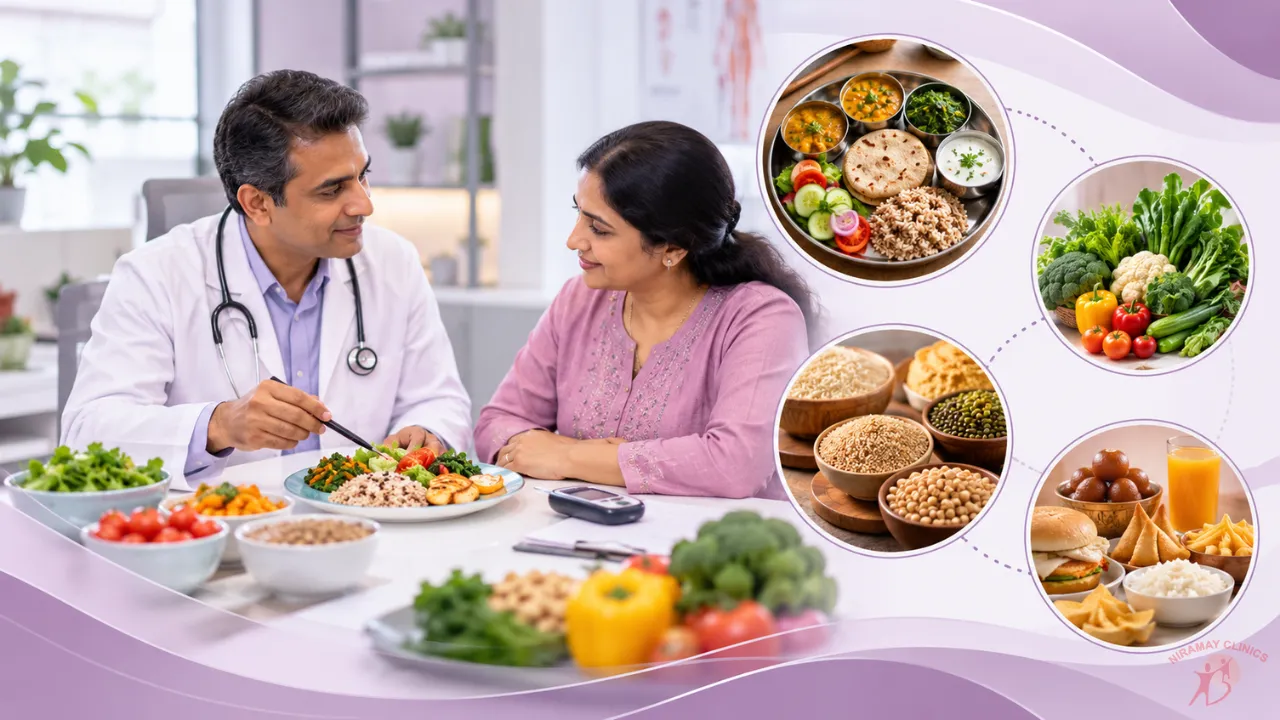
Quick answer
A person with diabetes can generally eat a wide variety of foods, but meals should emphasise vegetables, suitable protein sources, fibre-rich foods and sensible portions of carbohydrate-rich foods such as rice, roti, poha, idli and dosa. Whole fruits can usually be included in appropriate portions. Sugary drinks, frequent sweets, refined snacks and heavily processed foods are better kept limited. People taking insulin or medicines that can cause low blood sugar may need individual advice about meal timing and carbohydrate intake. The important point is this: a diabetes diet is not simply a list of foods that are allowed and forbidden. It is a way of organising your everyday meals so that they support blood glucose control and remain realistic enough to follow over the long term.
Getting diagnosed with diabetes can make food feel unnecessarily complicated.
Suddenly, ordinary questions come up at almost every meal.
Can I still eat rice? Is roti better? What about mangoes? Should I stop eating sweets completely? Is poha okay for breakfast? What should I eat if I am also trying to lose weight?
Managing diabetes does not usually require throwing away the way you have always eaten.
For most people, the focus is on how much you eat, how often you eat it, what you combine it with, and how the overall diet fits into your treatment plan.
Indian food can absolutely be part of a diabetes-conscious eating pattern. Rice, roti, dal, vegetables, curd, fruit and many familiar home-cooked dishes can all have a place. The approach simply needs some thought around portions, preparation and balance.
This guide looks at how to make those changes without turning every meal into a complicated calculation.
What is a diabetes-friendly Indian diet?
There is no single meal plan that suits every person with diabetes.
Two people may both have Type 2 diabetes but have very different nutritional needs. One may need to lose weight, another may be underweight. One may exercise regularly, while another may spend most of the day sitting. Medication, insulin use, kidney health, age and other medical conditions can also change dietary requirements.
Still, some basic principles are useful for almost everyone.
A balanced eating pattern generally involves:
-
Keeping portions of carbohydrate-rich foods sensible
-
Eating more vegetables and other fibre-rich foods
-
Including an appropriate source of protein
-
Choosing minimally processed foods more often
-
Limiting added sugars
-
Reducing frequent fried and highly processed foods
-
Choosing whole fruit instead of relying on fruit juice
-
Paying attention to meal timing when medication requires it
-
Combining diet with appropriate physical activity
This does not mean you need to stop eating Indian food.
In fact, many traditional Indian meals already contain useful foods such as pulses, vegetables, curd, spices, whole grains, nuts and seeds.
The challenge is often the way the meal is put together and the quantity consumed.
How to build a balanced plate for diabetes
One of the easiest ways to think about a meal is to look at the plate rather than individual foods.
Instead of making rice or roti the centre of the meal, try building the meal around vegetables and protein, with a controlled amount of carbohydrate.
A simple structure looks like this:
| Part of the meal | Examples |
|---|---|
| Vegetables | Bhindi, cabbage, cauliflower, beans, spinach, gourds, brinjal, cucumber, salad |
| Protein | Dal, beans, curd, eggs, paneer, tofu, fish or chicken |
| Carbohydrate | Roti, rice, millet, poha, idli, dosa or another grain-based food |
The exact proportions will vary from person to person.
For example, someone who is physically active may have different requirements from someone who is trying to lose weight. A person with kidney disease may also need dietary adjustments that are not necessary for everyone else.
That is why the plate method is better viewed as a starting framework, rather than a rigid prescription.
Which Indian foods can be included in a diabetes diet?
A diabetes diagnosis does not suddenly make ordinary Indian foods unhealthy.
What matters is the overall pattern.
Vegetables
Non-starchy vegetables are useful additions to meals because they provide fibre, vitamins, minerals and volume without contributing the same amount of carbohydrate as foods such as rice, bread or potatoes.
You can rotate through foods such as:
-
Bhindi
-
Cabbage
-
Cauliflower
-
Beans
-
Capsicum
-
Brinjal
-
Spinach and other leafy vegetables
-
Bottle gourd
-
Ridge gourd
-
Bitter gourd
-
Cucumber
-
Tomato
-
Radish
-
Broccoli
-
Mushrooms
The cooking method matters too.
A vegetable dish prepared with a modest amount of oil is very different from a preparation that is heavily fried or made with large amounts of cream, butter or other calorie-dense ingredients.
Dal, pulses and beans
Dal and pulses are familiar staples in many Indian households and can be useful components of a balanced meal.
Examples include:
-
Moong dal
-
Masoor dal
-
Toor dal
-
Chana
-
Rajma
-
Chickpeas
-
Other beans and pulses
These foods provide protein and fibre, although they also contain carbohydrate.
That distinction is worth remembering. Calling dal a "protein food" does not mean it is carbohydrate-free.
A sensible portion alongside vegetables and an appropriate amount of rice or roti can work well for many people.
What about protein?
Protein is an important part of a satisfying meal.
Depending on your food preferences and medical requirements, sources may include:
-
Eggs
-
Fish
-
Chicken
-
Curd
-
Paneer
-
Tofu
-
Dal
-
Beans
-
Other pulses
For someone who also wants to lose weight, including an appropriate protein source may help make meals more filling.
However, more protein is not automatically better for everyone. People with kidney disease, for example, may require specific dietary advice.
Can you eat rice if you have diabetes?
Yes.
A diabetes diagnosis does not automatically mean rice has to disappear from your plate.
The more useful questions are:
-
How much rice are you eating?
-
What else is in the meal?
-
How often are you eating large portions?
-
Is there enough vegetables and protein?
-
How does your blood glucose respond?
A large serving of rice with little else in the meal is quite different from a moderate serving accompanied by vegetables, dal and an appropriate protein source.
You also do not need to assume that brown rice can be eaten without limits. Brown rice can contain more fibre than white rice, but it still contributes carbohydrate.
Simple ways to manage rice portions
You could try:
-
Serving a smaller amount of rice.
-
Increasing the vegetables on the plate.
-
Including dal or another suitable protein source.
-
Avoiding a meal where rice takes up almost the entire plate.
-
Monitoring your glucose when your healthcare professional has advised you to do so.
Some people find that they can comfortably include rice in their routine. Others may need to reduce the amount or change the way the meal is structured.
There is no universal portion that works for everyone.
Is roti better than rice for diabetes?
This is another question patients ask frequently.
There is no simple rule that says roti is always better than rice.
Roti and rice both contribute carbohydrate. The nutritional value and effect of a meal depend on the type, portion, preparation and what accompanies it.
Whole-wheat roti can be a useful option. But eating several large rotis can still provide a substantial amount of carbohydrate and calories.
Paratha deserves additional attention because the amount of oil or ghee used during preparation can increase its calorie content considerably.
Instead of asking which food is automatically "better," look at the complete meal.
For example:
Roti + vegetable sabzi + dal + curd
may be a very different meal from:
Several large parathas + little vegetable + a sugary drink.
The name of the food alone does not tell the whole story.
What should you eat for breakfast with diabetes?
Breakfast is often where Indian diets become heavily carbohydrate-based.
Poha, upma, idli, dosa and bread are common choices. These foods do not necessarily need to be eliminated, but the meal can often be improved by paying attention to portion and adding protein or fibre.
Some possible combinations include:
Vegetable poha
Keep the portion sensible and add vegetables. Pairing it with an appropriate protein source can make the meal more balanced.
Idli with sambar
Sambar can add pulses and vegetables to the meal. Portion still matters, particularly if several idlis are eaten.
Moong dal or besan chilla
These can be paired with vegetables and unsweetened curd.
Vegetable omelette
For people who eat eggs, an omelette with vegetables can provide protein. It can be paired with a controlled portion of whole-grain toast or roti if appropriate.
Oats with a protein source
Choose an unsweetened preparation rather than turning breakfast into a bowl of oats with sugar, flavoured syrups or sweetened toppings.
The goal is not to find one "perfect diabetic breakfast."
It is to avoid making breakfast almost entirely refined or rapidly digested carbohydrate.
Can people with diabetes eat fruit?
Yes.
Fruit is often unnecessarily restricted after a diabetes diagnosis.
Whole fruits provide carbohydrates, but they also provide fibre, vitamins, minerals and other nutrients. The practical issue is usually portion size and the total amount of carbohydrate being consumed, rather than avoiding fruit altogether.
Depending on your individual diet, fruits such as these can be included:
-
Guava
-
Apple
-
Orange
-
Pear
-
Papaya
-
Pomegranate
-
Melons
-
Berries
-
Other seasonal fruits
There is no need to label a fruit as "forbidden" simply because it tastes sweet.
At the same time, fruit is not carbohydrate-free. Eating very large portions can still affect blood glucose.
Whole fruit or fruit juice: which is better?
For most people with diabetes, whole fruit is the more practical choice.
When fruit is turned into juice, it becomes much easier to consume a large amount quickly. A glass may contain the juice of several pieces of fruit without providing the same level of fullness as eating the fruit itself.
Sweetened packaged fruit drinks are an even less suitable everyday choice.
So instead of:
Fruit blender juice
consider simply eating an appropriate portion of whole fruit.
What are better snack options for diabetes?
Snacking can quietly add a lot of carbohydrate, fat and calories to the day.
Biscuits with tea, namkeen, chips, bakery snacks and sweets are easy to eat without noticing how much has been consumed.
Depending on your individual needs, alternatives could include:
-
Roasted chana
-
A small serving of nuts
-
Unsweetened curd
-
Whole fruit
-
Sprouts
-
Boiled eggs
-
Vegetable-based snacks
And remember: not everyone needs snacks between meals.
Some people are perfectly comfortable with three main meals. Others may need snacks depending on their medication, activity, work schedule or other circumstances.
If you are eating because you are genuinely hungry, consider what is driving that hunger. If you are eating simply because snacks are always available, changing the routine may be more useful than searching for a "diabetic snack."
Which foods should be limited?
Rather than creating an enormous "foods to avoid" list, it is usually more useful to identify foods that are best kept occasional.
Sugary drinks
These include:
-
Soft drinks
-
Sweetened juices
-
Sweetened tea and coffee
-
Energy drinks
-
Other sugar-sweetened beverages
Liquid calories can add up quickly because they often provide little satiety.
Sweets and desserts
Indian sweets such as:
-
Gulab jamun
-
Jalebi
-
Ladoo
-
Barfi
-
Peda
-
Rasgulla
can contain considerable amounts of sugar and calories.
That does not mean every family celebration has to become stressful.
The bigger issue is making these foods an everyday habit.
Refined snacks
Keep foods such as biscuits, cakes, pastries, packaged snacks and other highly refined foods limited.
Deep-fried foods
Regularly eating samosas, pakoras, puris and other deep-fried foods can make weight management more difficult because they can be very energy-dense.
The occasional food is different from a daily routine.
Can you eat sweets during festivals?
Food is part of family life, celebrations and culture.
Diabetes management should leave room for that reality.
During festivals, rather than thinking:
"I have diabetes, so I cannot eat anything."
a more practical approach may be:
-
Have a smaller portion.
-
Avoid combining several sugary foods in one sitting.
-
Skip sugary drinks where possible.
-
Eat slowly.
-
Include vegetables and protein with the main meal.
-
Avoid arriving at a celebration extremely hungry.
-
Return to your normal routine afterward.
You do not need to "punish" yourself for having a small serving of mithai.
At the same time, a festival should not turn into several days of unrestricted sweets and sugary drinks.
The pattern over time matters.
Why do fibre and protein matter?
Two things that can make meals more satisfying are fibre and protein.
Fibre
Fibre is found in foods such as:
-
Vegetables
-
Whole fruits
-
Pulses
-
Beans
-
Whole grains
-
Nuts
-
Seeds
It contributes to digestive health and can help with fullness.
If your current diet is low in fibre, increase it gradually. Adequate fluid intake is also important unless you have been advised to restrict fluids.
Protein
Protein contributes to satiety and is important for maintaining body tissues and muscle.
Eggs, fish, chicken, curd, paneer, tofu, dal and beans are examples of foods that can contribute protein.
The amount needed varies from person to person.Again, this is one reason why copying someone else's diabetes meal plan is not always appropriate.
Can a diabetes diet help with weight loss?
It can, when the eating pattern helps create an appropriate reduction in overall calorie intake while still providing adequate nutrition.
For people who need to lose weight, useful changes may include:
-
Reducing oversized portions
-
Increasing vegetables
-
Choosing appropriate protein sources
-
Eating more fibre-rich foods
-
Cutting back on sugary drinks
-
Reducing frequent fried foods
-
Limiting highly processed snacks
-
Increasing physical activity where appropriate
There is no requirement to follow an extreme low-carbohydrate diet or survive on salads.
A diet that produces rapid weight loss but cannot be maintained is unlikely to be a useful long-term solution.
What about exercise after meals?
Physical activity is an important part of diabetes management.
For some people, a walk after a meal can be a convenient way to include activity in their daily routine.
However, exercise can affect blood glucose, particularly in people using insulin or certain medicines.
If you experience symptoms such as:
-
Shaking
-
Sweating
-
Dizziness
-
Confusion
-
Sudden weakness
-
Unusual hunger
during or after exercise, speak with your healthcare professional. These symptoms can sometimes occur with low blood glucose.
Your exercise routine and medication may need to be considered together.
Does diabetes medication affect meal timing?
Sometimes it does.
Different diabetes medicines work differently. Some need to be taken with meals, while insulin regimens can have specific relationships with food and activity.
This is why you should not make major changes to your meal pattern and independently change medication doses or timing.
If you take insulin or a medicine that can cause hypoglycaemia, ask your doctor how your meals, exercise and medication schedule should fit together.
Never change insulin or diabetes medication simply because you have changed your diet unless your treating clinician has advised you to do so.
How to create a practical Indian diabetes meal plan
A meal plan should fit your actual day.
It should account for your work schedule, family meals, food preferences, activity and medical treatment.
Here is a simple framework:
| Time | Possible structure |
|---|---|
| Breakfast | Controlled carbohydrate + protein + vegetables/fibre |
| Mid-morning | Fruit or another suitable option if needed |
| Lunch | Vegetables + protein + controlled rice/roti portion |
| Evening | Nuts, roasted chana, curd or another suitable option if needed |
| Dinner | Vegetables + protein + controlled carbohydrate |
| Dessert | Occasional small portion |
These are examples, not prescribed quantities.
A person's calorie and carbohydrate requirements can vary significantly.
Sample Indian meal combinations
Meal option 1
-
1 appropriate portion of roti
-
Mixed vegetable sabzi
-
Dal
-
Salad
-
Unsweetened curd
Meal option 2
-
Moderate portion of rice
-
Dal
-
Cooked vegetables
-
Suitable protein
-
Salad
Meal option 3
-
Moong chilla
-
Vegetable filling
-
Unsweetened curd
Meal option 4
-
Fish or chicken
-
Cooked vegetables
-
Salad
-
Appropriate carbohydrate portion
These examples are intended to demonstrate how to structure a meal, not to prescribe an identical diet to every patient.
What if you eat at restaurants?
You do not have to stop eating outside after being diagnosed with diabetes.
A few small decisions can make restaurant meals easier to manage.
Consider:
-
Grilled or roasted foods instead of deep-fried starters.
-
Vegetable dishes or salads alongside the main course.
-
Smaller portions when servings are large.
-
Water or unsweetened beverages instead of sugary drinks.
-
Sharing desserts.
-
Being cautious with creamy gravies and dishes containing large amounts of oil or butter.
Also remember that restaurant food may contain considerably more oil, salt and calories than you would use at home.
The occasional restaurant meal is not the problem. Frequency and overall eating habits matter.
Common diabetes diet myths
"I have diabetes, so i can never eat rice."
Not necessarily.
Rice can be included in a suitable meal plan. The amount and the rest of the meal are important.
"Fruit is basically sugar, so i should avoid it."
Whole fruit can generally be part of a balanced diet. It contains carbohydrate, but it also provides fibre and important nutrients.
The focus should be on appropriate portions rather than eliminating fruit without a medical reason.
"Brown rice is unlimited because it is healthy."
Brown rice may have nutritional advantages over refined white rice, but it still contains carbohydrate.
The serving still matters.
"Sugar-free means i can eat as much as i want."
No.
A product labelled sugar-free can still contain calories, fat or other sources of carbohydrate.
Look at the complete nutrition information and serving size rather than relying only on the front-of-pack claim.
"I need completely separate food from my family."
Not necessarily.
In many Indian households, the same meal can work for everyone.
The differences may simply be in portion sizes, preparation methods and what each person puts on their plate.
"I need expensive diabetic foods."
Not usually.
A balanced diabetes diet can be built around ordinary foods available in most Indian kitchens.
Vegetables, pulses, curd, eggs, fish, chicken, whole grains, nuts and fruit can all be part of a suitable eating pattern.
When should your diet be personalised?
General dietary advice is useful, but there are situations where individual guidance becomes particularly important.
Speak with your doctor or qualified dietitian if you have:
-
Frequent high blood glucose readings
-
Repeated episodes of low blood glucose
-
Insulin treatment
-
Kidney disease
-
Liver disease
-
Significant obesity
-
Unexplained weight loss
-
Pregnancy or gestational diabetes
-
Multiple diabetes medicines
-
Difficulty controlling blood glucose despite lifestyle changes
Your nutritional needs can also change over time.
A meal plan that suited you two years ago may no longer be appropriate if your weight, medication, activity level or health status has changed.
How to make a diabetes diet easier to follow
You do not need to change everything at once.
Start with a few changes that are realistic.
1. look at your carbohydrate portions
You may not need to remove rice or roti. Start by checking whether the portion is larger than you actually need.
2. Add vegetables
If your plate is mostly rice or roti, add more vegetables before adding another serving of carbohydrate.
3. Include protein
Dal, curd, eggs, paneer, tofu, fish, chicken and other suitable foods can make a meal more balanced.
4. Reduce liquid sugar
Cutting down on sugary tea, soft drinks and sweetened beverages can be one of the simpler dietary changes.
5. Eat fruit rather than drinking it
Choose whole fruit instead of regularly drinking fruit juice.
6. Keep sweets occasional
You do not need to turn every celebration into a restriction exercise, but sweets should not become an everyday habit.
7. Be careful with "healthy" labels
Multigrain, sugar-free and natural are not automatic guarantees that a product is appropriate in unlimited quantities.
8. Pay attention to your glucose pattern
If your healthcare professional has asked you to monitor blood glucose, the readings can provide useful information about how your meals are affecting you.
9. Keep moving
Regular physical activity is an important part of diabetes management when medically appropriate.
10. Review the plan when circumstances change
Medication changes, weight changes, pregnancy, kidney problems or significant changes in activity can all affect dietary requirements.
The bottom line
A diabetes diet does not have to mean giving up Indian food.
You can often continue eating familiar foods while making sensible changes to portions, cooking methods and meal composition.
Rice does not automatically have to disappear. Roti is not automatically a free food. Fruit does not have to be banned. And you do not need expensive products labelled specifically for diabetes.
Instead, build meals around vegetables, suitable protein, fibre and sensible portions of carbohydrate, while keeping sugary drinks, frequent sweets, refined snacks and heavily processed foods under control.
Most importantly, your diet should work in real life.
It should work when you are eating at home, when your family is having a celebration, when you go to a restaurant and when your daily routine gets busy.
If your blood glucose remains difficult to control despite making reasonable lifestyle changes, the answer may not simply be to make your diet stricter. Your medication, physical activity, weight, sleep and other aspects of diabetes management may also need to be reviewed.
When to seek urgent care
Seek urgent care for vomiting, confusion, unusual drowsiness or symptoms of very high or very low sugar, especially if you take insulin or tablets that can cause low sugar.
Sources and further reading
Frequently asked questions
Yes. Rice can be part of a diabetes meal plan. What matters is the portion, the type of rice, how frequently it is eaten and what accompanies it. Pairing an appropriate rice portion with vegetables and protein can make the overall meal more balanced.
Options can include vegetable poha, idli with sambar, moong or besan chilla, vegetable omelette and unsweetened oats with an appropriate protein source. Portion size and the overall composition of the breakfast are more important than finding one food that is labelled "diabetic."
Many whole fruits can be included, such as guava, apple, orange, pear and papaya. The appropriate portion depends on your overall eating pattern and carbohydrate needs. Whole fruit is generally preferable to fruit juice.
There is no universal list of foods that every person must completely avoid. However, sugary drinks, frequent sweets, refined snacks, highly processed foods and frequent deep-fried foods are generally worth limiting.
Neither is automatically better for everyone. Both provide carbohydrate. The portion, preparation, accompanying foods and your individual glucose response all matter.
Small occasional portions may be possible for some people, particularly during celebrations, but sweets should not become a routine part of the diet. Your overall glucose control and treatment plan should be considered.
It can. Reducing excessive portions, sugary drinks and highly processed foods while increasing vegetables, fibre and appropriate protein can support weight management. The appropriate approach varies between individuals.
Not necessarily. A personalised plan using familiar foods can be easier to follow than a rigid chart. Your doctor or dietitian can help adjust portions and meal timing based on your medications, glucose levels, weight and other health conditions.
Related reading
- Can People With Diabetes Eat Rice? Practical Tips
- Best Indian Breakfast for Diabetes: Options and Mistakes
- Fruits for Diabetes: Which, How Much and When
- Diabetes and Sweets: Handling Mithai Without Spikes
- Diabetes Diet for Weight Loss: An Indian Plate Guide
Related guides: Diabetes and Obesity (Diabesity)
If you would like advice suited to your own reports and medicines, you can book an appointment or visit Niramay Clinics in Dhantoli, Nagpur.
Related services


More from the Health Library
Ready to talk to a specialist?
Call 0712 2422214 or +91 84591 41584, message us on WhatsApp, or use the appointment form. Please bring your previous reports and a list of the medicines you take.