
Diabetes Diet for Indians
Can People With Diabetes Eat Rice? Practical Tips
Written by Dr. Ajay V. Kaduskar, Diabetologist, Nagpur

MD (Medicine), PGDHSc (Diabetology), FEACD (The Netherlands)
Published · 4 min read
Quick answer
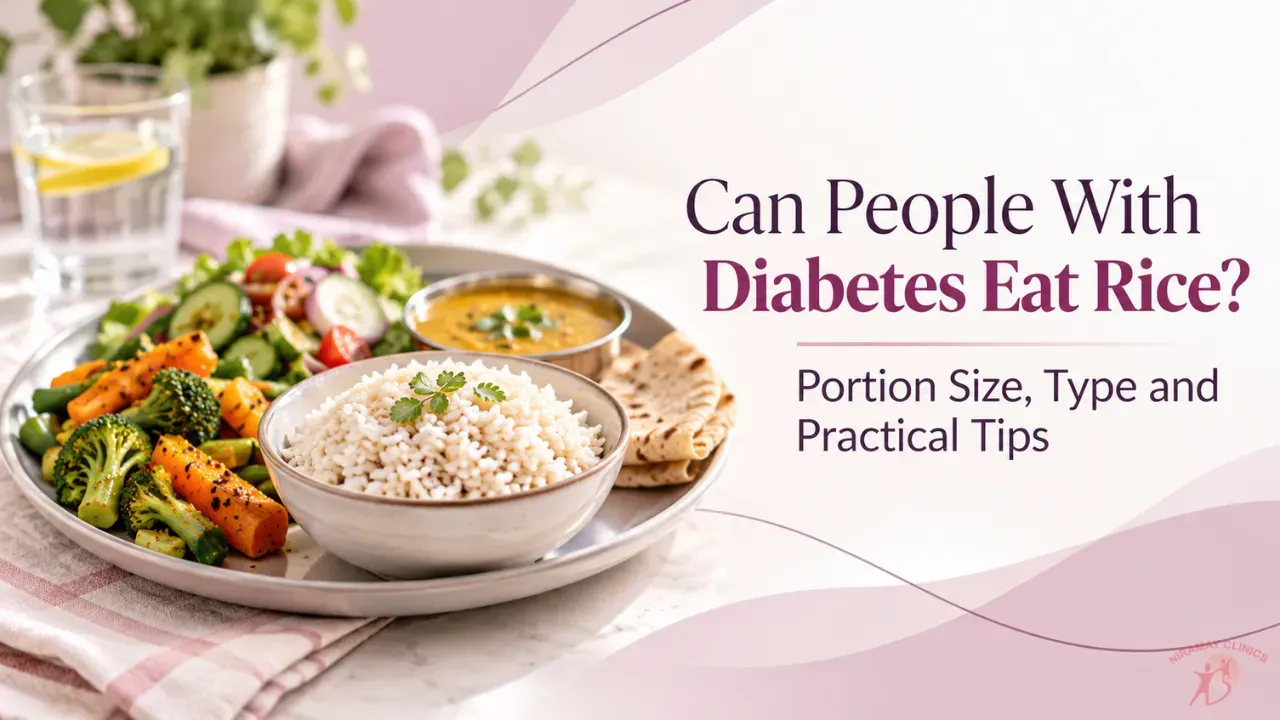
Yes, people with diabetes can usually eat rice in controlled portions. Keep rice to about a quarter of your plate, pair it with dal, vegetables and protein, choose less polished or brown rice or mix with millets, and avoid having rice alone or in large amounts. Check your blood sugar after meals to see how you respond.
Rice is a staple in many Indian homes, and many people with diabetes worry they must give it up. Rice is a carbohydrate that raises blood sugar, but with the right portion, type and pairing, many people with diabetes can include rice in their meals.
Why does rice raise blood sugar?
White rice is mostly starch, which breaks down into glucose. Polished white rice has less fibre and can raise blood sugar quickly, especially in large portions. The total amount of carbohydrate you eat matters most.
Which types of rice are better?
Brown rice
Contains more fibre and nutrients than white rice and may raise blood sugar more slowly.
Parboiled rice
Partly processed in a way that can lower its effect on blood sugar compared with polished white rice.
Hand-pounded or less polished rice
Retains more of the outer layers and fibre.
Mixing with millets
Combining rice with jowar, bajra, foxtail millet or other millets increases fibre.
Portion still matters for every type.
How much rice can you eat?
Portions depend on your body size, activity level and blood sugar control. A practical approach is to keep cooked rice to roughly a quarter of the plate, often about half to one cup per meal, as advised by your doctor or dietitian. Monitoring your sugar helps you personalise this.
How can you reduce blood sugar spikes?
-
Eat vegetables and protein first, then rice
-
Pair rice with dal, sambar, rajma, paneer, fish, egg or chicken
-
Add a large salad or vegetable side
-
Avoid rice with only potato or other starchy dishes
-
Choose cooled and reheated rice occasionally, which may have more resistant starch
-
Take a 10 to 15 minute walk after meals
Should you have rice at dinner?
Many people find a lighter dinner helps sugar control. If you eat rice at dinner, keep the portion small and pair it well. Avoid eating late at night.
What about rice-based foods?
Idli, dosa, poha, upma and pulao can fit in moderation. Add vegetables and protein, such as sambar, chutney with peanuts or sprouts, and watch portions.
In short
-
Rice can fit into a diabetes diet with portion control.
-
Brown, parboiled or millet mixes add fibre.
-
Pair rice with protein and vegetables.
-
Eat vegetables and protein first.
-
Check sugar after meals to personalise portions.
You do not have to give up rice to manage diabetes. Smart portions and pairings can keep blood sugar steady while you enjoy familiar meals. Dr. Ajay V. Kaduskar at Niramay Clinics in Nagpur helps patients build practical Indian meal plans.
When to seek urgent care
Seek urgent care for vomiting, confusion, unusual drowsiness or symptoms of very high or very low sugar, especially if you take insulin or tablets that can cause low sugar.
Sources and further reading
Frequently asked questions
Yes, in controlled portions and paired with dal, vegetables and protein. White rice raises sugar faster than higher-fibre options, so smaller portions and balanced meals help.
Brown rice has more fibre and nutrients and may raise blood sugar more slowly than white rice. Portion size still matters, so do not overeat brown rice.
Many people do well keeping cooked rice to about a quarter of their plate, often half to one cup per meal. Your doctor or dietitian can personalise portions based on your sugar readings.
Both contain carbohydrates. Whole wheat or millet rotis usually have more fibre than white rice, but portion size and pairing matter most. Many people include both in moderation.
Yes. Eating vegetables and protein before rice can slow sugar absorption and reduce post-meal spikes. A short walk after meals also helps.
Related reading
- Full guide: diabetes diet
- Best Indian Breakfast for Diabetes: Options and Mistakes
- Fruits for Diabetes: Which, How Much and When
- Prediabetes Diet: What to Eat in an Indian Diet
- Diabetes and Sweets: Handling Mithai Without Spikes
- Diabetes Diet for Weight Loss: An Indian Plate Guide
If you would like advice suited to your own reports and medicines, you can book an appointment or visit Niramay Clinics in Dhantoli, Nagpur.
Related services


More from the Health Library
Ready to talk to a specialist?
Call 0712 2422214 or +91 84591 41584, message us on WhatsApp, or use the appointment form. Please bring your previous reports and a list of the medicines you take.