
Diabetes Diet for Indians
Diabetes and Sweets: Handling Mithai Without Spikes
Written by Dr. Ajay V. Kaduskar, Diabetologist, Nagpur

MD (Medicine), PGDHSc (Diabetology), FEACD (The Netherlands)
Published · 4 min read
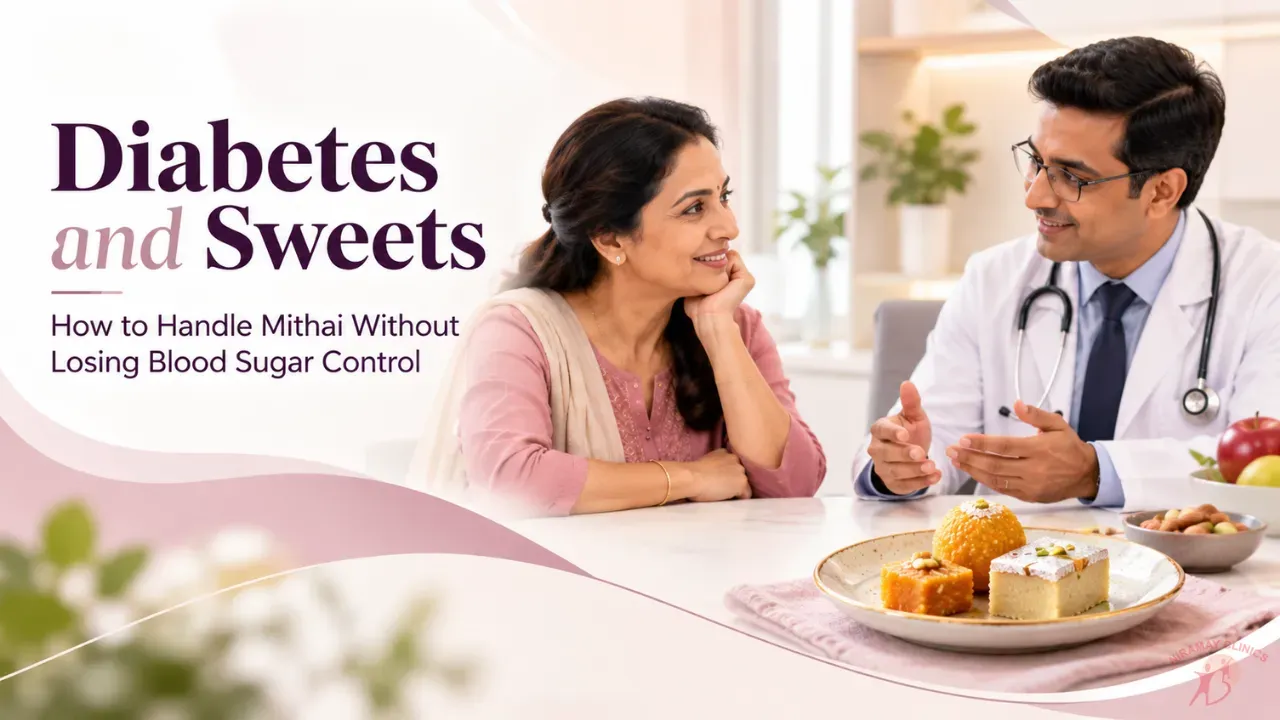
Quick answer
People with diabetes can eat mithai occasionally in small portions, as part of a balanced meal, while keeping the total carbohydrates for the day in check. Avoid eating sweets on an empty stomach or in large amounts. Pair them with protein, fibre and a walk afterwards, and check your blood sugar to learn how your body responds.
Festivals, weddings and family visits all come with mithai. If you have diabetes, it can feel like everyone is enjoying something you must avoid. The truth is more kind. Most people with diabetes can enjoy a small portion of sweets now and then, if they plan well.
Why do sweets raise blood sugar?
Most mithai is made of sugar, refined flour, milk solids and ghee. The sugar and flour are digested fast and enter the blood quickly. Fat and milk slow this a little, but the overall carbohydrate load is high. A single piece of some sweets can carry as many carbohydrates as a full chapati or more.
Is a sugar-free sweet safe?
"Sugar-free" does not mean carbohydrate-free or calorie-free. Many such sweets contain dates, jaggery, refined flour, khoya or sugar alcohols, which can still raise blood sugar. Read the labels, and watch the portion. Artificial sweeteners in small amounts are usually acceptable, but they do not make a large portion safe.
How can you enjoy mithai safely?
1. keep the portion small
One small piece, about the size of a coin or a small cube, is a reasonable serving. Share a piece with someone, or cut it into halves and eat slowly.
2. do not eat it alone on an empty stomach
Eat it right after a balanced meal that contains vegetables, dal, curd or paneer. The fibre and protein slow the rise in blood sugar.
3. swap something else
Plan the day so that mithai replaces part of the carbohydrate in the meal, such as a roti or half the rice, rather than being added on top.
4. choose better options
-
Sweets made with nuts, such as a small piece of dry fruit burfi
-
Fruit-based desserts with no added sugar, such as a few strawberries or berries with curd
-
Homemade versions where you can reduce sugar and add nuts or seeds
-
Roasted makhana or chikki made with nuts in small servings
5. move after eating
A 10 to 15 minute walk after the meal helps lower the post-meal rise.
6. check your sugar
If you use a glucometer, check two hours after the sweet to learn your own response. If you take insulin or certain tablets, ask your doctor how to adjust.
What should you avoid?
-
Eating several pieces at once
-
Sweets with sugar syrup, such as jalebi, gulab jamun and rasgulla, in large portions
-
Sweet drinks, such as lassi with sugar and packaged juices
-
Snacking on sweets all day during festivals
-
Skipping meals to "save room" for dessert, which can cause low or very high sugar
How do you handle festivals and weddings?
-
Eat a healthy meal or snack before the event, so you are not very hungry.
-
Take a small plate and fill half with vegetables and salads.
-
Decide in advance which sweet you will have.
-
Say "no thank you" politely when hosts push you. You can say your doctor has advised moderation.
-
Keep your medicines and glucometer with you.
When should you talk to your doctor?
-
Your sugar is often above target even without sweets
-
You feel dizzy, shaky or sweaty after skipping meals
-
You are unsure how to adjust insulin or tablets for a festival
-
You have a very high reading with thirst, tiredness or blurred vision
Points to keep
-
Occasional mithai in a small portion is fine for most people with diabetes.
-
Eat it after a balanced meal, not on an empty stomach.
-
"Sugar-free" sweets are not always safe in large amounts.
-
A short walk after eating helps.
-
Plan ahead for festivals, and check your sugar to learn your response.
Diabetes care is about balance, not punishment. With a little planning, you can share in the joy of festivals while keeping your blood sugar steady. For a personalised food plan, consult Dr. Ajay V. Kaduskar, a diabetologist at Niramay Clinics in Nagpur.
Sources and further reading
Frequently asked questions
Yes, in small portions and occasionally. Eat it after a balanced meal, avoid large amounts and adjust the rest of your meal. Check your blood sugar to see how you respond.
No sweet is completely free of sugar impact, but small portions of nut-based sweets, or desserts made with less sugar, are better than syrup-based sweets. Portion size matters more than the type.
Not always. Some sugar-free sweets still contain flour, dates, khoya or fats and can raise blood sugar. Check labels and keep the portion small.
Eat regular meals, keep sweets to a small portion after meals, avoid sweet drinks, stay active, and check your sugar more often. Avoid skipping meals and take medicines as prescribed.
Not really. Jaggery and honey still raise blood sugar like sugar. They may have small amounts of minerals, but are not a safe substitute in large quantities.
Check about two hours after the first bite. This shows your post-meal peak. If it is much above your target, reduce the portion or change the timing next time and discuss it with your doctor.
Related reading
- Full guide: diabetes diet
- Can People With Diabetes Eat Rice? Practical Tips
- Best Indian Breakfast for Diabetes: Options and Mistakes
- Fruits for Diabetes: Which, How Much and When
- Diabetes Diet for Weight Loss: An Indian Plate Guide
If you would like advice suited to your own reports and medicines, you can book an appointment or visit Niramay Clinics in Dhantoli, Nagpur.
Related services


More from the Health Library
Ready to talk to a specialist?
Call 0712 2422214 or +91 84591 41584, message us on WhatsApp, or use the appointment form. Please bring your previous reports and a list of the medicines you take.