
Technology and Evolution of GLP-1
Dual and Triple Agonists: What Comes After Semaglutide?
Written by Dr. Ajay V. Kaduskar, Diabetologist, Nagpur

MD (Medicine), PGDHSc (Diabetology), FEACD (The Netherlands)
Published · 4 min read
Quick answer
An agonist is a medicine that activates a receptor. Semaglutide is a single agonist that activates the GLP-1 receptor. Tirzepatide is a dual agonist acting on GLP-1 and GIP receptors. Triple agonists add a third target, usually glucagon. Early studies suggest bigger weight and metabolic effects, but long-term safety and availability are still being studied, and some are not approved.
Semaglutide changed how doctors treat diabetes and obesity. Tirzepatide then raised the bar. Now researchers are exploring medicines that act on even more hormones. Understanding the terms helps you follow the news without confusion.
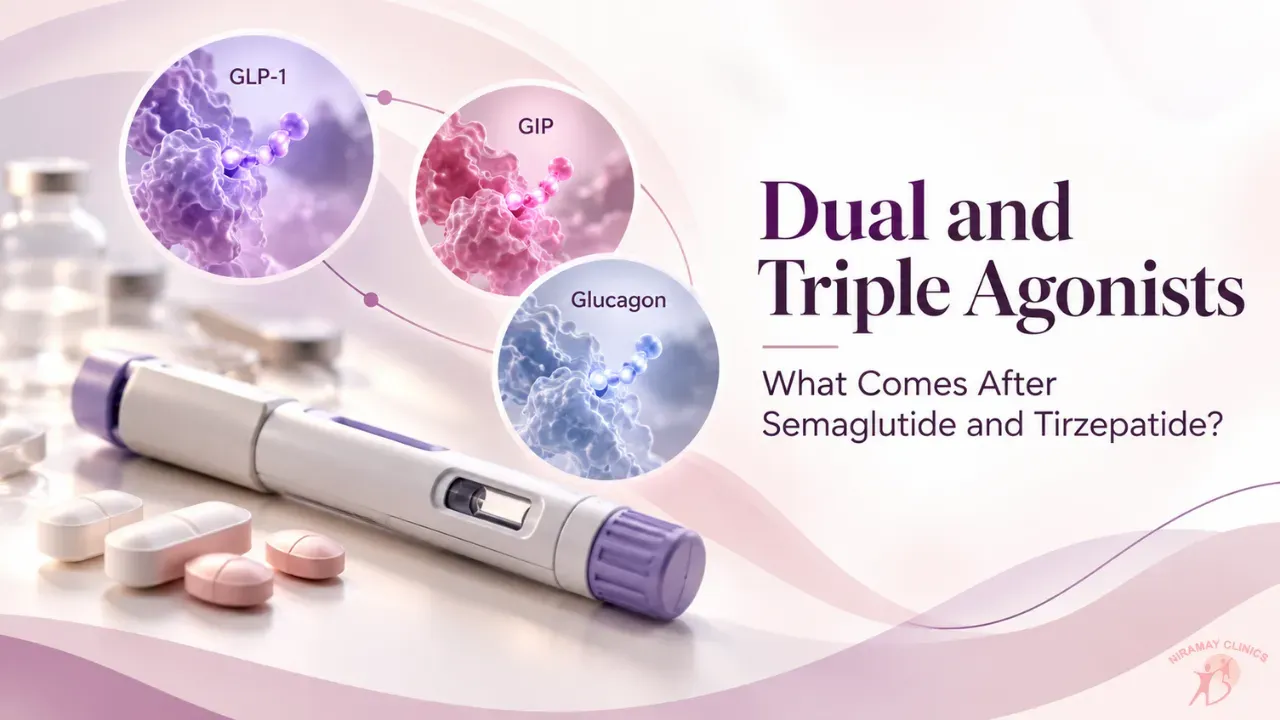
What are the gut hormones involved?
GLP-1
Increases insulin release when sugar is high, lowers glucagon, slows stomach emptying and reduces appetite.
GIP
Another gut hormone that boosts insulin release after meals and may help with fat metabolism and appetite regulation.
Glucagon
Raises blood sugar in the fasting state but also increases energy use and fat burning in the liver. In combination with GLP-1, it may increase weight loss.
What is a dual agonist?
A dual agonist activates two receptors. Tirzepatide activates GLP-1 and GIP. In trials, it lowered blood sugar and weight more than semaglutide in several comparisons. Other dual agonists, such as GLP-1 and glucagon combinations, are being tested.
What is a triple agonist?
A triple agonist activates GLP-1, GIP and glucagon receptors. Retatrutide is one example in clinical trials. Early studies reported large average weight loss, along with improvements in fatty liver and other markers. However, these are trial results, and the drug is not yet approved for general use at the time of writing in most places. Check current status before making decisions.
What other approaches are being studied?
-
Amylin combinations, which add to the feeling of fullness
-
Once-monthly injections
-
Oral small-molecule GLP-1 medicines
-
Medicines that preserve muscle while reducing fat
-
Combination treatments with other weight-loss medicines
Why does targeting more hormones help?
Obesity and diabetes involve many signals from the gut, fat tissue, liver and brain. Medicines that act on several pathways can have broader effects on appetite, insulin release and energy use. However, more targets can also mean more side effects, and careful long-term studies are needed.
What are the possible concerns?
-
Stomach side effects such as nausea, vomiting and diarrhoea
-
Faster heart rate in some studies
-
Potential loss of muscle along with fat
-
Unknown long-term safety for newer agents
-
High cost when first launched
-
Misinformation and unregulated "research" products sold online
Do not buy unapproved products from the internet. They may be fake, unsafe or wrongly dosed.
What should patients do now?
-
Rely on approved medicines prescribed by your doctor.
-
Ask your doctor about new treatments as they are approved.
-
Stay informed using reliable sources.
-
Remember that diet, exercise and sleep stay important whatever the medicine.
When should you see a doctor?
Talk to a diabetologist if you are interested in the latest treatments, have not reached your targets with current medicines, or have side effects.
A quick recap
-
Semaglutide is a single agonist, tirzepatide a dual agonist, and triple agonists are in development.
-
Targeting more hormones may give greater benefits but needs long-term safety data.
-
Many new medicines are still being studied and are not available everywhere.
-
Never buy unapproved injectables online.
-
Medical guidance is essential.
The science is moving quickly, which is exciting. But the best treatment for you is the one that is approved, safe and suited to your health. To discuss current options, consult Dr. Ajay V. Kaduskar, a diabetologist at Niramay Clinics in Nagpur.
Sources and further reading
Frequently asked questions
It is a medicine that activates two hormone receptors. Tirzepatide, for example, activates both GLP-1 and GIP receptors, which helps lower blood sugar and body weight.
A triple agonist activates three receptors, usually GLP-1, GIP and glucagon. Retatrutide is an example under study. Trials are ongoing, and it may not be approved in all countries.
In several studies, tirzepatide produced greater average weight loss and HbA1c reduction than semaglutide. Individual response and tolerance differ, so your doctor will choose what suits you.
Availability depends on regulatory approval, which can change. Ask your doctor for current information, and never buy unapproved versions online.
Not necessarily. Newer medicines may have stronger effects, but long-term safety data take time. Approved medicines have established safety information.
Researchers are studying combinations with amylin, longer-acting monthly injections, oral small molecules and drugs that protect muscle. These are still being tested.
Related reading
- Full guide: GLP-1 drugs
- Oral GLP-1 Tablets: Are Pills Replacing Injections?
- Why Did GLP-1 Medicines Become a Global Trend?
- The Surprising History of GLP-1 Drugs
- How GLP-1 Injection Pens Work: The Technology
If you would like advice suited to your own reports and medicines, you can book an appointment or visit Niramay Clinics in Dhantoli, Nagpur.
Related services


More from the Health Library
Ready to talk to a specialist?
Call 0712 2422214 or +91 84591 41584, message us on WhatsApp, or use the appointment form. Please bring your previous reports and a list of the medicines you take.