

Technology and Evolution of GLP-1
How GLP-1 Injection Pens Work: The Technology
Written by Dr. Ajay V. Kaduskar, Diabetologist, Nagpur

MD (Medicine), PGDHSc (Diabetology), FEACD (The Netherlands)
Published · 4 min read
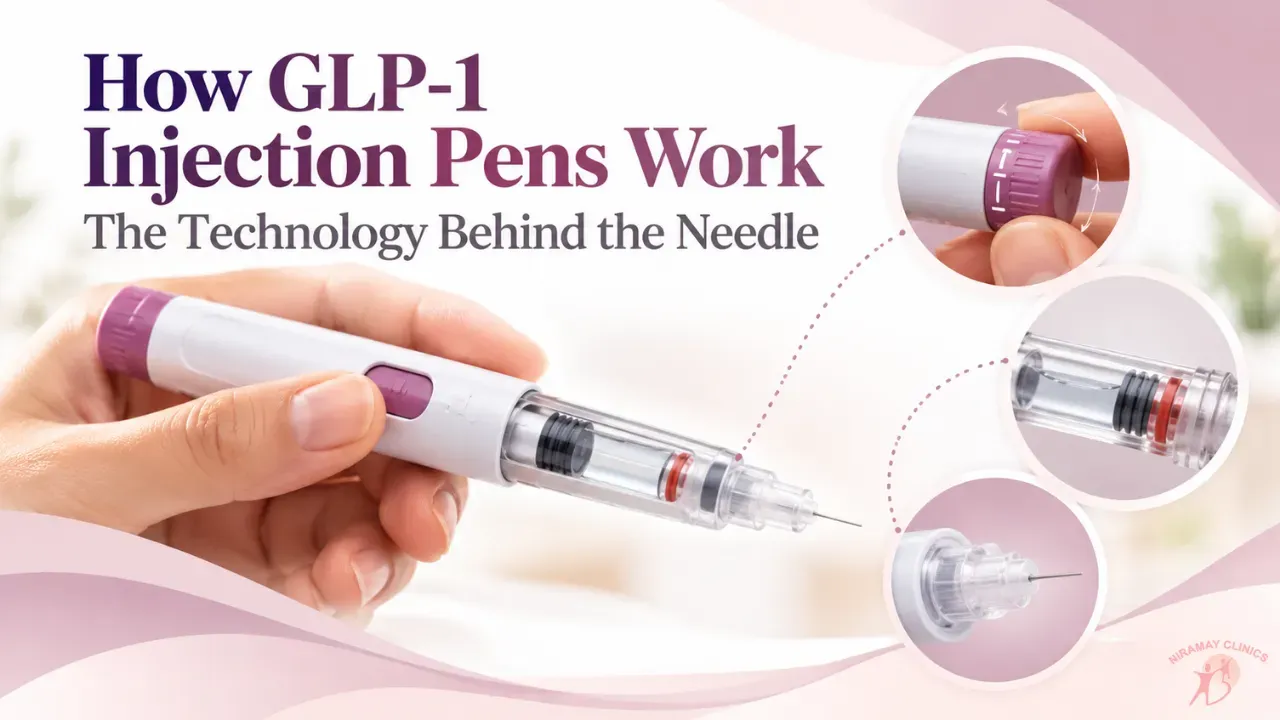
Quick answer
A GLP-1 pen is a pre-filled or cartridge-based device that holds the medicine and delivers a precise dose through a very fine needle when you dial the dose and press the button. The pen uses a dial or preset click system to measure the dose, a spring or mechanical plunger to push the medicine, and a thin needle that is attached for each use.
The idea of a weekly injection worries many people at first. In reality, modern pens are small, simple and designed to make dosing easy. A look at how they work can take away much of the fear.
Why use a pen instead of a syringe?
-
The dose is measured by the device, which reduces errors.
-
The needle is very thin, so injections are less painful.
-
The pen is portable and discreet.
-
Dose adjustment is simple.
-
It suits people with poor eyesight or limited dexterity.
-
It reduces the fear of handling vials and syringes.
What are the parts of a pen?
The body or cartridge holder
It holds a sealed cartridge containing the medicine.
The dose selector
A dial, or a click mechanism, sets the dose. In some pens, each click equals a measured amount. Others have preset doses for weekly use.
The dose window
It shows the dose you have selected.
The injection button
Pressing it delivers the dose. A counter or click tells you when it is complete.
The needle
A tiny disposable needle is screwed or clicked on before each use. It is usually 4 to 6 mm long and very thin, which makes most injections feel like a light prick.
The cap
It protects the pen and the needle.
How does the dose get delivered?
When you set the dose, the pen's internal mechanism moves a plunger a set distance. When you press the button, the plunger pushes the medicine from the cartridge through the needle into the fat layer under the skin. The medicine is then absorbed slowly into the blood. This slow release is part of why weekly dosing is possible.
How has pen design improved?
-
Thinner and shorter needles, reducing pain
-
Pens with audible clicks to confirm the dose
-
Pens that hide the needle, helpful for needle-fearful people
-
Pre-set weekly doses, reducing mistakes
-
Dose counters and memory features in some devices
-
Smaller, lighter bodies for easier carrying
How should pens be stored?
-
Keep unopened pens in the refrigerator, not in the freezer.
-
Follow the label for how long an in-use pen can stay at room temperature.
-
Protect from direct sunlight and heat.
-
Do not use a pen if the medicine looks cloudy, discoloured or has particles, unless the label says it should look that way.
-
Never share pens with others, even with a new needle.
What mistakes should you avoid?
-
Reusing needles
-
Not priming when the instructions say to
-
Injecting into the same spot every week
-
Not holding the button long enough
-
Using an expired pen
-
Storing in a hot vehicle or a freezer
When should you see a doctor?
Contact your doctor or nurse if the pen jams, the dose does not seem to go in, you see leakage, or you have swelling, redness or a lump at the injection site that does not settle.
A quick recap
-
GLP-1 pens deliver a measured dose through a very fine needle.
-
Dial, plunger and button work together for accuracy.
-
Modern pens are designed for comfort and easy use.
-
Correct storage and rotation of sites are important.
-
Ask your doctor or nurse to show you the technique.
Pen technology has made injections far less intimidating. With a short demonstration, most people become comfortable within a week or two. For help learning the technique, consult Dr. Ajay V. Kaduskar, a diabetologist at Niramay Clinics in Nagpur.
Sources and further reading
Frequently asked questions
Most people feel only a light prick or nothing, because the needle is very thin and short. Rotating sites and using a new needle each time help reduce discomfort.
A dial or preset mechanism moves a plunger a fixed distance. Some pens have clicks for each unit, while others are preset for a specific weekly dose. Always follow the instructions for your pen.
No. Needles should be used once. Reuse can cause pain, infection, a blocked needle and inaccurate dosing.
Store unused pens in the refrigerator, away from the freezer compartment. Follow the label for how long an in-use pen can be kept at room temperature. Avoid heat and direct sunlight.
Yes. Use an insulated pouch, keep it away from heat, and carry it in hand baggage, not checked luggage. Keep a prescription copy for airport security.
Check the needle and cap, and look for leakage. Do not repeat the injection on your own. Contact your doctor, nurse or the manufacturer for guidance.
Related reading
- Full guide: GLP-1 drugs
- The Surprising History of GLP-1 Drugs
- Oral GLP-1 Tablets: Are Pills Replacing Injections?
- How Are GLP-1 Medicines Given? Technique and Storage
- Dual and Triple Agonists: What Comes After Semaglutide?
- Why Did GLP-1 Medicines Become a Global Trend?
If you would like advice suited to your own reports and medicines, you can book an appointment or visit Niramay Clinics in Dhantoli, Nagpur.
Related services


More from the Health Library
Ready to talk to a specialist?
Call 0712 2422214 or +91 84591 41584, message us on WhatsApp, or use the appointment form. Please bring your previous reports and a list of the medicines you take.