

Type 2 Diabetes
First Signs of Type 2 Diabetes You Should Not Ignore
Written by Dr. Ajay V. Kaduskar, Diabetologist, Nagpur

MD (Medicine), PGDHSc (Diabetology), FEACD (The Netherlands)
Published · 4 min read
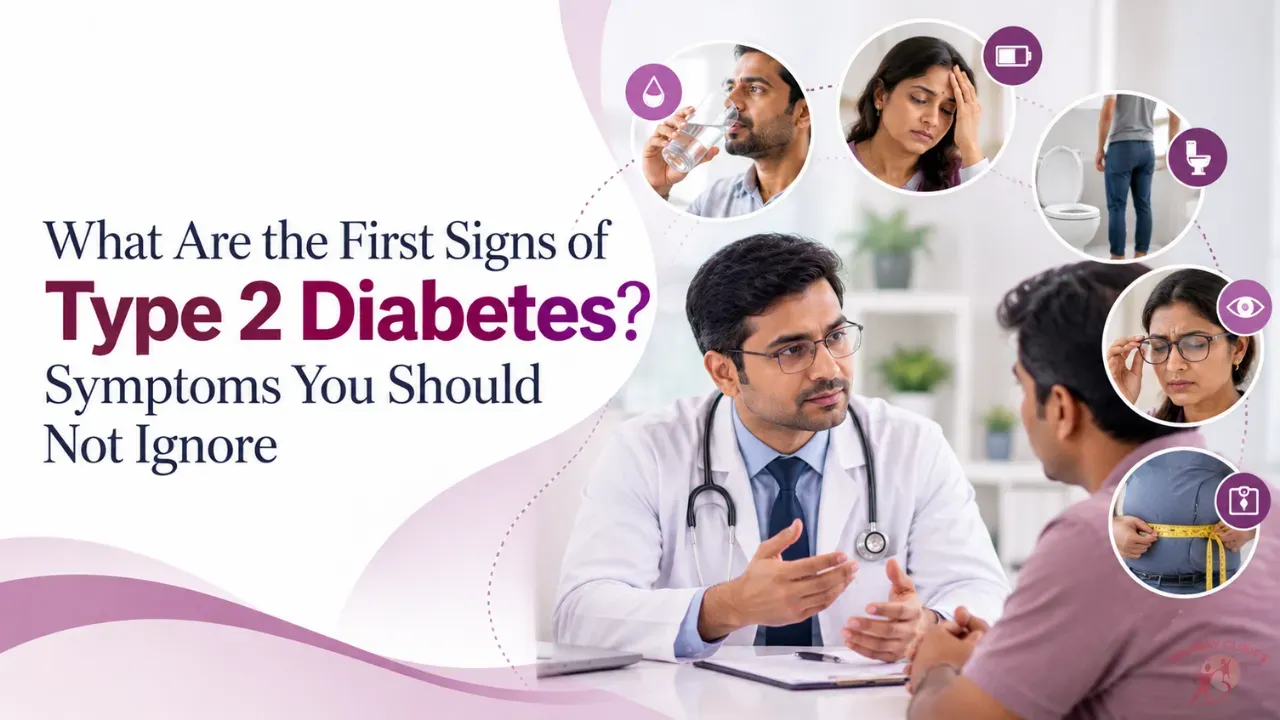
Quick answer
Early signs of type 2 diabetes include increased thirst, frequent urination, tiredness, blurred vision, slow-healing cuts, frequent infections, tingling in the feet and unexplained weight changes. Many people have no symptoms at all, so adults with risk factors should get tested with fasting glucose or HbA1c even if they feel well.
Type 2 diabetes is a long-term condition in which blood sugar stays high because the body does not respond well to insulin and gradually makes less of it. It often develops slowly, and many people have no clear symptoms for years. Knowing the early signs helps you get tested and treated sooner.
What are the common early signs?
Increased thirst and frequent urination
High blood sugar draws water out of the body through urine, leading to more frequent urination, including at night, and constant thirst.
Tiredness
Cells cannot use glucose efficiently, leaving many people feeling tired or low on energy.
Blurred vision
Changing sugar levels can affect the eye's lens and cause blurred vision that comes and goes.
Slow-healing wounds and frequent infections
High sugar affects circulation and immunity, so cuts heal slowly and infections such as skin, gum, urinary or genital yeast infections become more common.
Tingling or numbness
Some people notice tingling, burning or numbness in the feet or hands, an early sign of nerve involvement.
Weight changes and hunger
Some people lose weight without trying or feel hungrier than usual.
Dark skin patches
Dark, velvety skin in the neck folds or armpits, called acanthosis nigricans, can signal insulin resistance.
Why do many people have no symptoms?
Blood sugar often rises gradually, and the body adjusts. People may notice symptoms only when sugar is quite high or complications begin. This is why screening matters.
Who should get tested?
-
Adults over about 30 to 35, especially with family history
-
People with overweight or obesity, particularly around the waist
-
People with high blood pressure or abnormal cholesterol
-
Women with previous gestational diabetes or PCOS
-
People with prediabetes
-
Those with an inactive lifestyle
South Asians, including Indians, tend to develop diabetes at a younger age and lower body weight, so earlier screening is often advised.
Which tests confirm diabetes?
-
Fasting plasma glucose
-
HbA1c, which reflects average sugar over about three months
-
Oral glucose tolerance test
Your doctor interprets results and often repeats a test to confirm.
When should you see a doctor?
See a doctor if you have any of the signs above or risk factors, even if you feel well. Seek urgent care for extreme thirst, vomiting, confusion, deep rapid breathing or drowsiness, which may indicate very high sugar levels.
A quick recap
-
Type 2 diabetes often develops silently.
-
Thirst, frequent urination and tiredness are common early signs.
-
Slow healing and frequent infections can be clues.
-
People with risk factors should get tested.
-
Simple blood tests confirm the diagnosis.
Early detection gives you the best chance to control diabetes and prevent complications. If you notice symptoms or have risk factors, a simple test can provide clarity. Dr. Ajay V. Kaduskar, a diabetologist at Niramay Clinics in Nagpur, diagnoses and treats type 2 diabetes.
Sources and further reading
Frequently asked questions
Early signs often include increased thirst, frequent urination, tiredness and blurred vision. Some people notice slow-healing cuts or frequent infections. Many people have no symptoms, so testing is important if you have risk factors.
Yes. Many people have no noticeable symptoms for years. Regular screening with fasting glucose or HbA1c helps detect diabetes early, especially for those with family history, excess weight or high blood pressure.
Many guidelines suggest screening adults from around 35 years, or earlier for those with risk factors such as family history, obesity, PCOS or high blood pressure. Indians often develop diabetes earlier, so earlier testing is reasonable.
Fasting glucose, HbA1c and the oral glucose tolerance test are all used. Each has strengths, and doctors often use more than one or repeat a test to confirm the diagnosis.
Dark, velvety patches in the neck or armpits, called acanthosis nigricans, often indicate insulin resistance. They are not diabetes themselves but are a reason to check blood sugar.
Related reading
- Full guide: type 2 diabetes
- Can Type 2 Diabetes Be Reversed or Put Into Remission?
- Prediabetes HbA1c: What the Number Means
- How to Control Blood Sugar Naturally: What Works and What Does Not
- How Often Should You Check Blood Sugar and HbA1c?
- When Should You See a Diabetologist?
If you would like advice suited to your own reports and medicines, you can book an appointment or visit Niramay Clinics in Dhantoli, Nagpur.
Related services


More from the Health Library
Ready to talk to a specialist?
Call 0712 2422214 or +91 84591 41584, message us on WhatsApp, or use the appointment form. Please bring your previous reports and a list of the medicines you take.