

Type 2 Diabetes
How Often Should You Check Blood Sugar and HbA1c?
Written by Dr. Ajay V. Kaduskar, Diabetologist, Nagpur

MD (Medicine), PGDHSc (Diabetology), FEACD (The Netherlands)
Published · 4 min read
Quick answer
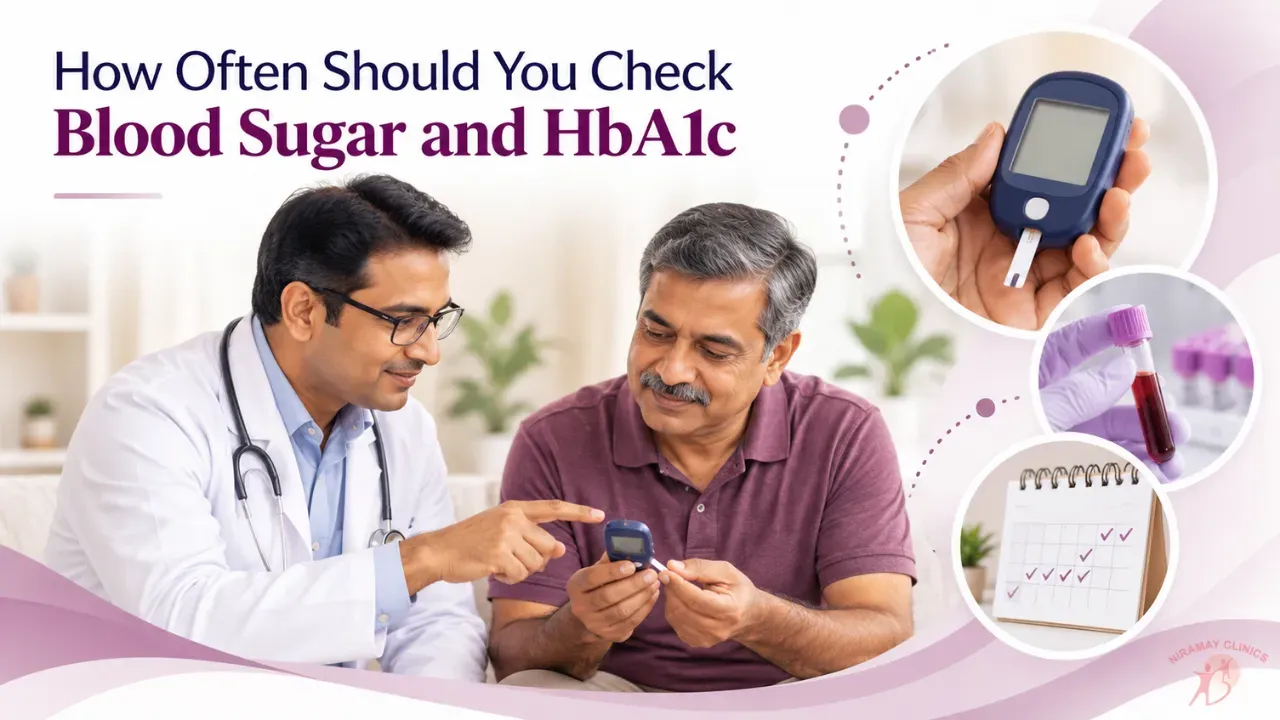
HbA1c is usually checked every three months when control is changing and every six months when it is stable. Home blood sugar testing may range from several times a day for people on insulin to a few times a week for those on tablets with stable control. Your doctor will set a schedule for you.
Testing shows how well your plan is working. The right frequency depends on your treatment, your control and your doctor's advice.
HbA1c testing
-
Every three months if treatment has changed or sugar is not at target
-
Every six months if control is stable
-
No fasting needed
Home blood sugar testing
On insulin
Often before meals and at bedtime, and when symptoms occur.
On tablets only
Often fasting and after meals a few days a week, as advised.
Newly diagnosed or changing treatment
More frequent testing for a period.
Useful times to test
-
Fasting, before breakfast
-
Two hours after a main meal
-
Before bed
-
When you feel unwell or have symptoms of low or high sugar
Keep a record
Write readings in a notebook or app with notes on meals and activity. Bring it to your visits.
Other regular checks
-
Blood pressure and cholesterol
-
Kidney tests
-
Eye and foot examinations
In short
-
HbA1c is checked every three to six months.
-
Home testing depends on treatment.
-
Test at useful times, not randomly.
-
Keep a record.
-
Follow your doctor's plan.
Testing is only useful when the results guide action. For a monitoring plan, you can consult Dr. Ajay V. Kaduskar at Niramay Clinics in Nagpur.
When to seek urgent care
Seek urgent care for extreme thirst with vomiting, confusion, deep rapid breathing, unusual drowsiness, or signs of very low sugar such as sweating, shaking and confusion.
Sources and further reading
Frequently asked questions
Not always. Your doctor will advise how often.
Post-meal sugars may be high. Testing after meals can help.
Yes, but readings are most useful at set times.
Reasonably, if used correctly. Lab tests are the reference.
Yes, illness can raise sugar.
Contact your doctor, as treatment may need adjusting.
Related reading
- Full guide: type 2 diabetes
- CGM vs Glucometer: Which Is Better for Type 2 Diabetes?
- What Is Time in Range (TIR) in Diabetes?
- When Should You See a Diabetologist?
- Diabetes and Kidney Disease: Which Tests You Need
- First Signs of Type 2 Diabetes You Should Not Ignore
- How to Control Blood Sugar Naturally: What Works and What Does Not
- Can Type 2 Diabetes Be Reversed or Put Into Remission?
If you would like advice suited to your own reports and medicines, you can book an appointment or visit Niramay Clinics in Dhantoli, Nagpur.
Related services


More from the Health Library
Ready to talk to a specialist?
Call 0712 2422214 or +91 84591 41584, message us on WhatsApp, or use the appointment form. Please bring your previous reports and a list of the medicines you take.