

Continuous Glucose Monitoring
CGM vs Glucometer: Which Is Better for Type 2 Diabetes?
Written by Dr. Ajay V. Kaduskar, Diabetologist, Nagpur

MD (Medicine), PGDHSc (Diabetology), FEACD (The Netherlands)
Published · 4 min read
Quick answer
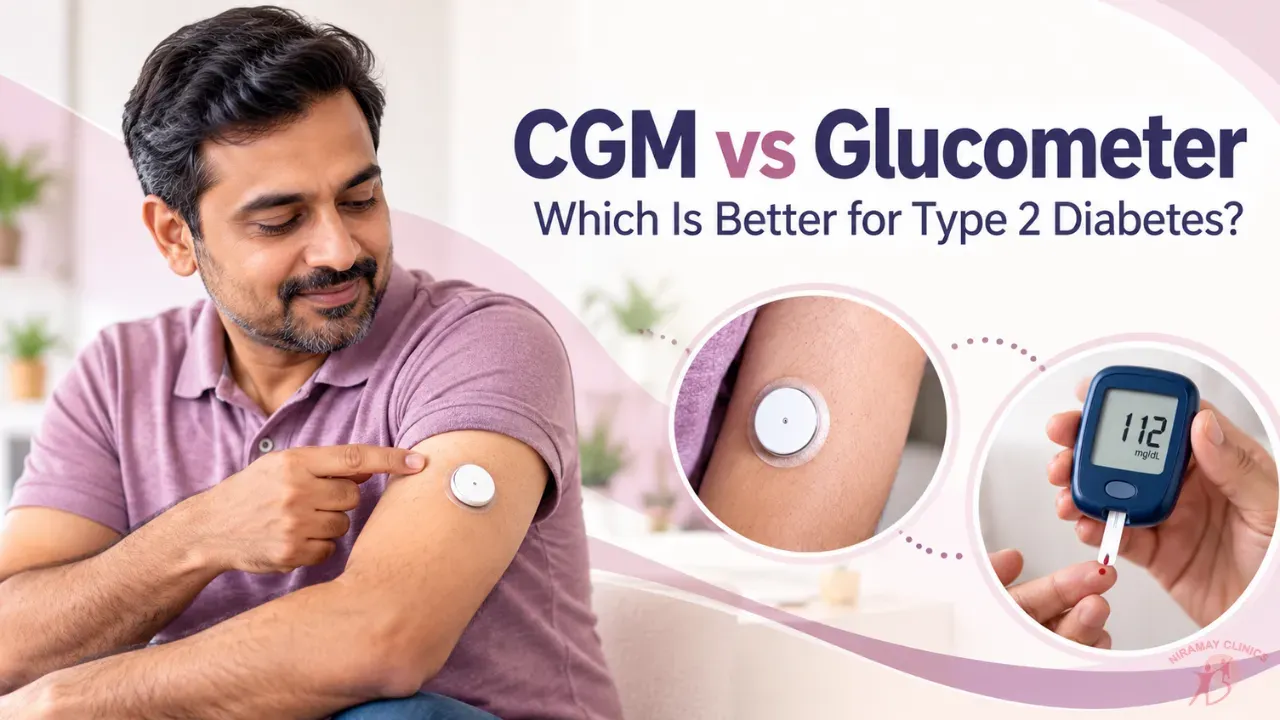
A glucometer measures your blood sugar at one moment, using a drop of blood from a finger-prick. A CGM uses a small sensor on the arm or abdomen to measure sugar in the fluid under the skin every few minutes, showing trends and patterns. A CGM is more informative and convenient, especially for people on insulin, but costs more. A glucometer is still reliable, affordable and useful for many people.
For decades, a finger-prick glucometer was the only way to check blood sugar at home. Now continuous glucose monitors (CGMs) show sugar levels all day and night. Both have a place. Understanding the difference helps you choose well.
How does a glucometer work?
You prick your finger, place a drop of blood on a test strip and the meter shows a number. It gives a precise reading for that moment. Most people test fasting, before meals or two hours after meals, as advised.
How does a CGM work?
A tiny sensor filament sits just under the skin, held by a patch. It measures glucose in the interstitial fluid every one to five minutes. A reader or phone displays the current level, the trend arrow and a graph. Sensors usually last 10 to 15 days and then need replacing.
What are the differences?
| Feature | Glucometer | CGM |
|---|---|---|
| Readings | Single points | Continuous, every few minutes |
| Finger-pricks | Several a day | Few or none |
| Shows trends | No | Yes, with arrows and graphs |
| Alarms for low or high | No | Yes, on many devices |
| Cost | Lower | Higher |
| Wear | None | Sensor patch for 10 to 15 days |
| Accuracy | Direct blood reading | Slight lag and small differences |
| Reports | Manual diary | Automatic reports for the doctor |
What are the benefits of a CGM?
-
You see how food, exercise, stress and sleep affect your sugar.
-
It can warn you about low blood sugar, which is especially valuable if you use insulin or sulfonylureas.
-
It reveals night-time lows and early-morning highs.
-
It reduces the number of finger-pricks.
-
Reports help your doctor adjust treatment more precisely.
-
It can motivate behaviour change.
What are the limitations?
-
Higher cost, and in some cases limited availability
-
A small lag compared with blood readings
-
Occasional sensor errors, skin irritation or sensor falling off
-
Readings should be checked with a finger-prick when symptoms do not match
-
Data overload can cause anxiety in some people
Who benefits most from a CGM?
-
People on multiple daily insulin injections
-
People with frequent or unrecognised low blood sugar
-
Those with unpredictable sugar levels
-
Pregnant women with diabetes
-
People wanting to understand food and activity effects, in consultation with the doctor
When is a glucometer enough?
For many people with stable type 2 diabetes on tablets, a glucometer used at planned times is enough. A CGM can also be used for short periods, such as 10 to 14 days, to review patterns and adjust treatment.
Can you use both?
Yes. Many people with a CGM still keep a glucometer for checking symptoms, confirming unusual readings or when a sensor fails.
When should you see a doctor?
See your doctor if your readings are often above target, you have low sugar symptoms, or you want to know whether a CGM suits you.
In short
-
A glucometer gives a single reading. A CGM gives continuous readings and trends.
-
CGM is especially helpful for people on insulin or with low sugar episodes.
-
A glucometer is affordable and enough for many people with stable diabetes.
-
Short-term CGM use can guide treatment.
-
Your doctor can help you decide.
The best tool is the one that helps you control your sugar safely and fits your life and budget. To choose the right monitoring plan, consult Dr. Ajay V. Kaduskar, a diabetologist at Niramay Clinics in Nagpur.
Sources and further reading
Frequently asked questions
A CGM gives more information, including trends and alarms, and is especially useful for people on insulin. A glucometer is still accurate, cheaper and enough for many people. The better option depends on your needs.
Often fewer. Many modern CGMs do not need routine finger-pricks, but you may check with a glucometer if symptoms do not match the reading or when advised.
Most sensors last about 10 to 15 days, depending on the device. You then replace it with a new one.
Modern CGMs are generally accurate, but they measure fluid under the skin, so readings lag slightly behind blood. During rapid changes, differences can be larger.
Yes. It can help them understand food and activity effects, even in short-term use, though evidence of benefit is strongest in insulin users. Discuss with your doctor.
Cost varies by brand and duration. Ask your doctor for current options, including short-term use, which can be cheaper.
Related reading
- Full guide: continuous glucose monitoring
- What Is Time in Range (TIR) in Diabetes?
- How to Read a CGM Report: AGP and Glucose Patterns
- CGM in Pregnancy: When It Helps and What to Know
- Does Everyone With Type 2 Diabetes Need a CGM?
If you would like advice suited to your own reports and medicines, you can book an appointment or visit Niramay Clinics in Dhantoli, Nagpur.
Related services


More from the Health Library
Ready to talk to a specialist?
Call 0712 2422214 or +91 84591 41584, message us on WhatsApp, or use the appointment form. Please bring your previous reports and a list of the medicines you take.