
Continuous Glucose Monitoring
Does Everyone With Type 2 Diabetes Need a CGM?
Written by Dr. Ajay V. Kaduskar, Diabetologist, Nagpur

MD (Medicine), PGDHSc (Diabetology), FEACD (The Netherlands)
Published · 4 min read
Quick answer
No. CGM is most useful for people on insulin, those with frequent low sugar, unpredictable readings or pregnancy, and anyone who needs detailed information to adjust treatment. Many people with stable type 2 diabetes on tablets do well with regular fingerstick checks and HbA1c. Your doctor can advise whether a CGM would help you.
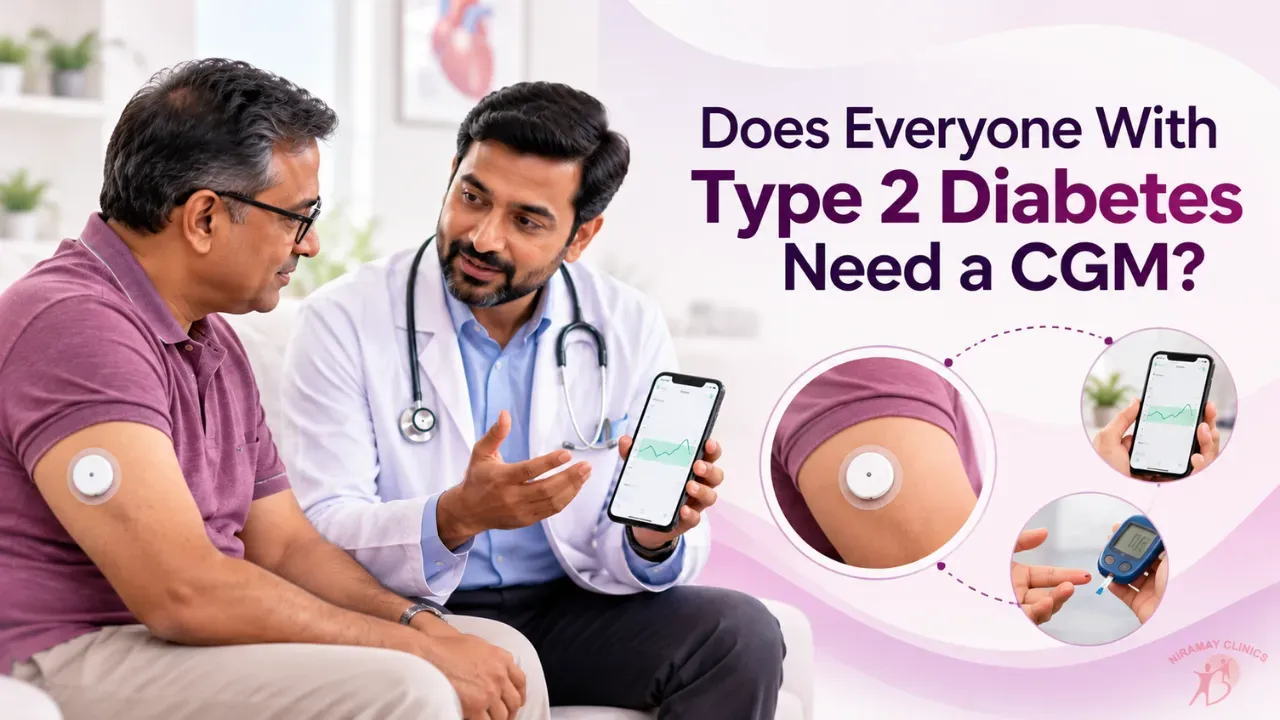
A continuous glucose monitor (CGM) tracks sugar levels through the day and night using a small sensor worn on the body. It is a powerful tool, but not every person needs one.
Who benefits most
-
People on multiple daily insulin injections
-
Those with frequent or unnoticed low sugar
-
Pregnancy with diabetes
-
Unexplained swings in readings
-
People who want to understand how food and activity affect sugar, with medical guidance
Who may manage without
-
Stable type 2 diabetes on tablets with good HbA1c
-
Those who prefer simple monitoring
-
People for whom cost is a barrier
What a CGM shows
-
Trends through the day and night
-
Time spent in target range
-
Alerts for high and low sugar
Limits to know
-
Readings may lag slightly behind blood glucose
-
Sensors cost money and need replacing
-
Data needs interpretation, and more numbers can cause anxiety in some people
-
Fingerstick checks may still be needed
Getting value from a CGM
-
Review reports with your doctor
-
Focus on patterns, not single readings
-
Use it to guide meals, activity and medicines
A quick recap
-
CGM is helpful but not essential for everyone.
-
Insulin users benefit most.
-
Many stable patients manage with fingersticks.
-
Data needs interpretation.
-
Discuss with your doctor.
The best monitoring method is one that fits your treatment and lifestyle. For advice, you can consult Dr. Ajay V. Kaduskar at Niramay Clinics in Nagpur.
When to seek urgent care
Seek urgent care if a sensor or meter shows very high or very low readings with symptoms such as vomiting, confusion, unusual drowsiness, sweating, shaking or fainting.
Sources and further reading
Frequently asked questions
It gives more information, but both are useful.
Yes. Some people use it for a couple of weeks to learn patterns.
No. HbA1c is still used for long-term control.
Most people feel only a brief sensation when applying the sensor.
Coverage varies. Check with your insurer.
It can show how foods affect sugar, but it is not a weight loss tool on its own.
Related reading
- Full guide: continuous glucose monitoring
- CGM vs Glucometer: Which Is Better for Type 2 Diabetes?
- What Is Time in Range (TIR) in Diabetes?
- How to Read a CGM Report: AGP and Glucose Patterns
- CGM in Pregnancy: When It Helps and What to Know
- How Often Should You Check Blood Sugar and HbA1c?
If you would like advice suited to your own reports and medicines, you can book an appointment or visit Niramay Clinics in Dhantoli, Nagpur.
Related services


More from the Health Library
Ready to talk to a specialist?
Call 0712 2422214 or +91 84591 41584, message us on WhatsApp, or use the appointment form. Please bring your previous reports and a list of the medicines you take.