

Continuous Glucose Monitoring
CGM in Pregnancy: When It Helps and What to Know
Written by Dr. Ajay V. Kaduskar, Diabetologist, Nagpur

MD (Medicine), PGDHSc (Diabetology), FEACD (The Netherlands)
Published · 4 min read
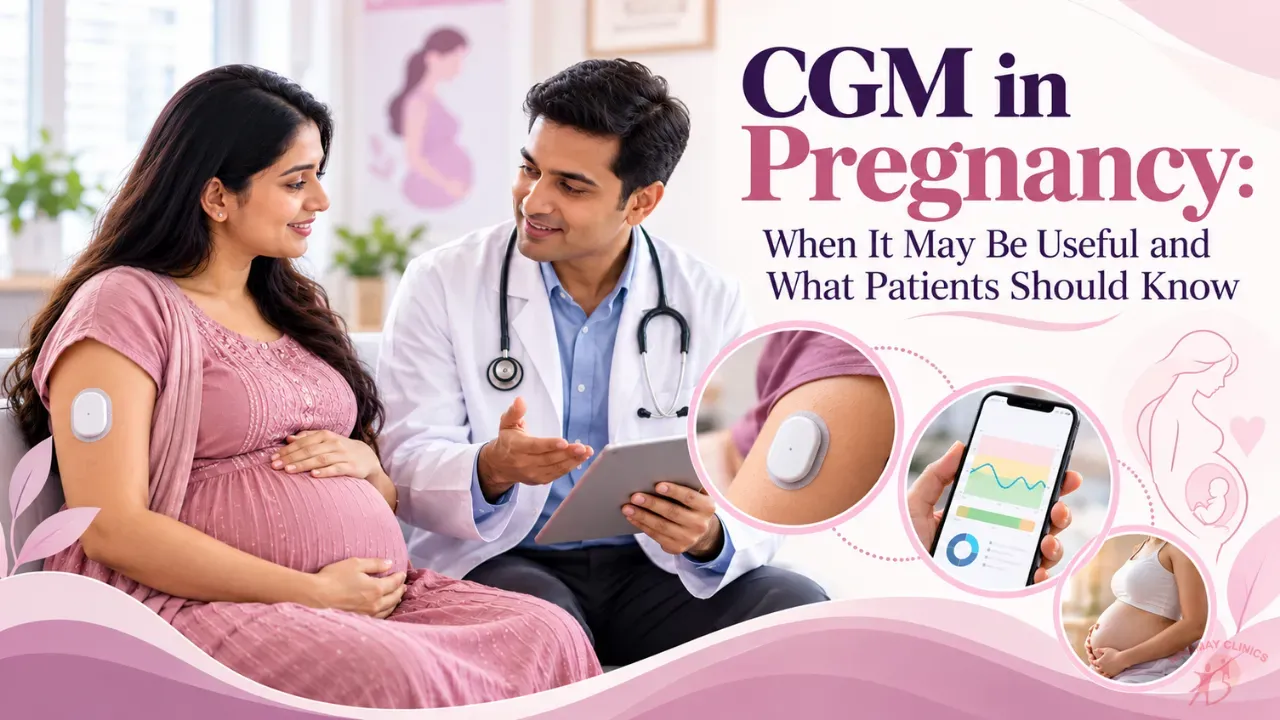
Quick answer
CGM can help pregnant women with type 1 or type 2 diabetes, and may be useful in some with gestational diabetes, by showing glucose patterns day and night. Pregnancy targets are tighter than usual, about 63 to 140 mg/dL with more than 70 percent time in range. CGM supports but does not completely replace finger-pricks, and should be used with advice from the diabetes and obstetric team.
Blood sugar control matters a great deal in pregnancy. Tight, stable sugars protect both the mother and baby. Continuous glucose monitoring (CGM) can give a fuller picture than finger-pricks alone, and is increasingly used in diabetic pregnancies.
Why does blood sugar control matter in pregnancy?
High blood sugar can increase the risk of a large baby, premature birth, birth injuries, low blood sugar in the newborn, high blood pressure in pregnancy and caesarean delivery. In early pregnancy, uncontrolled sugars can raise the risk of birth defects. Low sugars also need to be avoided, especially in women on insulin.
How can CGM help?
-
It shows patterns that finger-pricks miss, such as post-meal peaks and night-time lows.
-
It supports precise insulin dose changes, which are frequent in pregnancy.
-
It can alert you to dangerous lows.
-
It gives your doctor a clear 14-day report.
-
Studies in type 1 diabetes in pregnancy show that CGM can improve time in range and may reduce complications for babies.
What are the pregnancy targets?
Typical targets for CGM in pregnancy with type 1 diabetes are:
-
Time in range (63 to 140 mg/dL): more than 70 percent
-
Time below 63 mg/dL: less than 4 percent
-
Time below 54 mg/dL: less than 1 percent
-
Time above 140 mg/dL: less than 25 percent
Targets in type 2 and gestational diabetes may be similar, but your team will individualise them.
Who may benefit most?
-
Pregnant women with type 1 diabetes
-
Women with type 2 diabetes using insulin
-
Women with gestational diabetes who have unclear or unstable sugars, or are on insulin
-
Women with frequent or unnoticed low blood sugar
-
Women who find it hard to do multiple finger-pricks
What are the limits?
-
A small lag compared with blood readings
-
Possible errors in the first day of a sensor or with pressure on it
-
Skin irritation from adhesives
-
Cost and availability in India
-
Not all brands are approved or validated for pregnancy use
-
Need to confirm unusual readings with a finger-prick
How should you use CGM safely in pregnancy?
-
Start with your doctor's advice, preferably before or in early pregnancy.
-
Choose a sensor that is suitable for pregnancy.
-
Wear it as continuously as possible.
-
Keep a food and insulin diary.
-
Check with a glucometer when a reading does not match your symptoms.
-
Review the report with your doctor or diabetes educator every one to two weeks.
-
Do not change insulin doses on your own.
What about gestational diabetes?
Many women with gestational diabetes manage with diet and a glucometer. A CGM may be useful for a short period to understand patterns, particularly when sugars are hard to control. Its role is still being studied, and practices differ.
When should you see a doctor?
Contact your team if you have repeated lows or highs, a sensor that gives suspicious readings, skin reactions, or symptoms such as extreme thirst, vomiting or reduced baby movements.
Points to keep
-
CGM can improve safety and control in diabetic pregnancies.
-
Pregnancy targets are tighter than usual.
-
It is most helpful for type 1 or insulin-treated diabetes.
-
Finger-pricks are still needed when readings are doubtful.
-
Use it under the guidance of your diabetes and obstetric team.
A steady sugar level gives your baby the best start. CGM is a helpful tool, not a replacement for care and follow-up. For guidance during pregnancy, consult Dr. Ajay V. Kaduskar, a diabetologist at Niramay Clinics in Nagpur.
Sources and further reading
Frequently asked questions
CGM is generally considered safe in pregnancy and is used in diabetic pregnancies. Sensor adhesives can irritate the skin, and some devices are validated for pregnancy while others are not. Ask your doctor which one to use.
For type 1 diabetes, the common target is more than 70 percent of time between 63 and 140 mg/dL, with less than 4 percent below 63 mg/dL. Your team may set different targets.
Sometimes. You may need them to confirm unusual readings, during rapid changes or when symptoms do not match the CGM. Your team will advise.
Some do, especially if sugars are unstable or if on insulin. Many women are managed with a glucometer alone. Discuss with your doctor.
In type 1 diabetes pregnancies, CGM has been linked with better glucose control and fewer neonatal complications such as low blood sugar in newborns. Evidence in other groups is still growing.
Often every one to two weeks during pregnancy, because insulin needs change quickly. Your team will set the schedule.
Related reading
- Full guide: continuous glucose monitoring
- What Is Time in Range (TIR) in Diabetes?
- How to Read a CGM Report: AGP and Glucose Patterns
- Gestational Diabetes Test: When and What Results Mean
- When Is Insulin Needed in Gestational Diabetes?
- CGM vs Glucometer: Which Is Better for Type 2 Diabetes?
- Does Everyone With Type 2 Diabetes Need a CGM?
If you would like advice suited to your own reports and medicines, you can book an appointment or visit Niramay Clinics in Dhantoli, Nagpur.
Related services


More from the Health Library
Ready to talk to a specialist?
Call 0712 2422214 or +91 84591 41584, message us on WhatsApp, or use the appointment form. Please bring your previous reports and a list of the medicines you take.